Big Bird in China
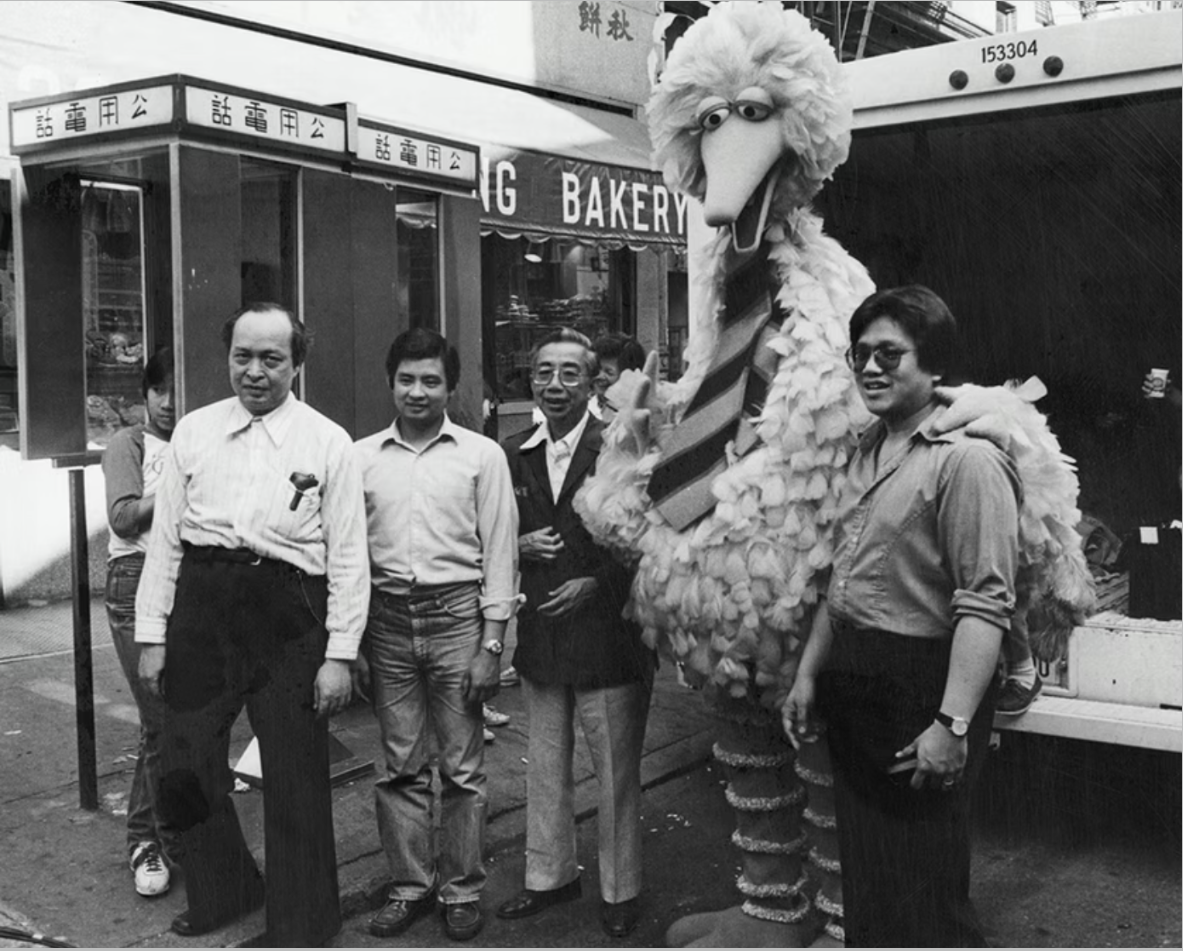
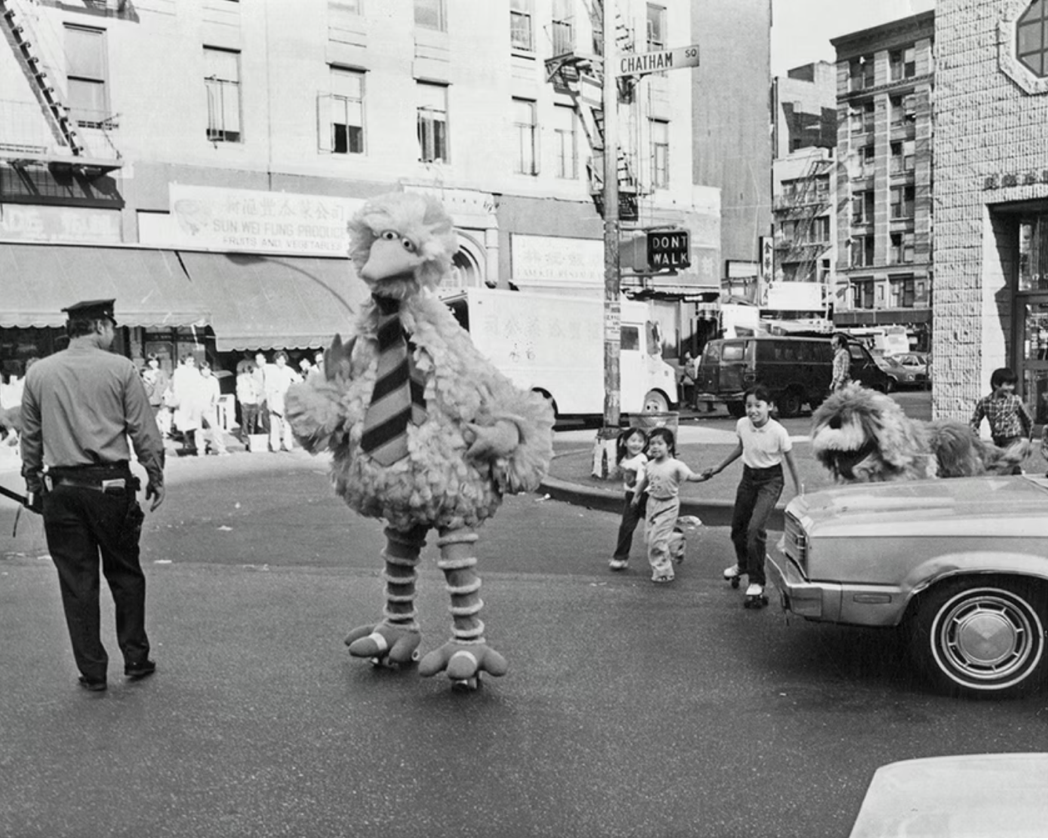
These photos of Big Bird in Chinatown were captured in 1982 while the Sesame Street character was filming scenes for a television special, “Big Bird in China,” which won an Emmy Award in 1984 for Outstanding Children’s Program. The inspiration for the special, in which Big Bird visits China and teaches American children about its culture, came from the puppeteer portraying Big Bird, Caroll Spinney. In 1979, Spinney had previously made a trip to China to film the “Bob Hope on the Road to China” NBC special, the first of its kind American variety show filmed in China. Upon his return, he proposed the idea for a Big Bird special to Jon Stone, a writer and producer for Sesame Street. The Children’s Television Workshop (now Sesame Workshop) then reached out to Chairman Zhang, head of China Central Television (CCTV). This led to a five-week tour of China to scout locations and cast for the show. The Chinese scenes were filmed in Beijing, Guilin, and Suzhou, while their U.S. scenes were filmed in New York Chinatown. The Chinese production team insisted on casting a Chinese child to star alongside Big Bird. After a search through Beijing daycare centers and kindergartens, six-year-old Ouyang Lien-Tze was cast. The trip also prompted Sesame Street producers to suggest dubbing the show into Mandarin to build an audience in China in 1981, two years ahead of the “Big Bird in China” release in 1983. CCTV executives agreed, and as a result, Sesame Street‘s 12th season was dubbed and became a staple of children’s programming in China.
During this period, the Cold War was raging, and China-Soviet relations were strained. The United States sought to leverage the situation by initiating a cultural exchange with China. This effort began with Bob Hope, who had a history of entertaining the military. The “Big Bird in China” special was conceived shortly after, drawing significant attention to China within the United States and fostering positive relations. This strategic move was a direct consequence of the U.S.’s conflict with the Soviet Union, which prompted the U.S. to seek new allies in the region, particularly China, an emerging economic power. While China was also communist, the U.S. was careful to frame the Soviets as the “bad guys” while maintaining China as a close ally. Ultimately, the United States aimed to subvert any possible Soviet influence within China, and bringing a globally recognized children’s show like Sesame Street to China aided in this effort. Although there was no official comment from the State Department, Sesame Street‘s worldwide reputation for its values suggests that the U.S.’s decision to allow the filming was part of a broader plan to ease Sino-American relations.