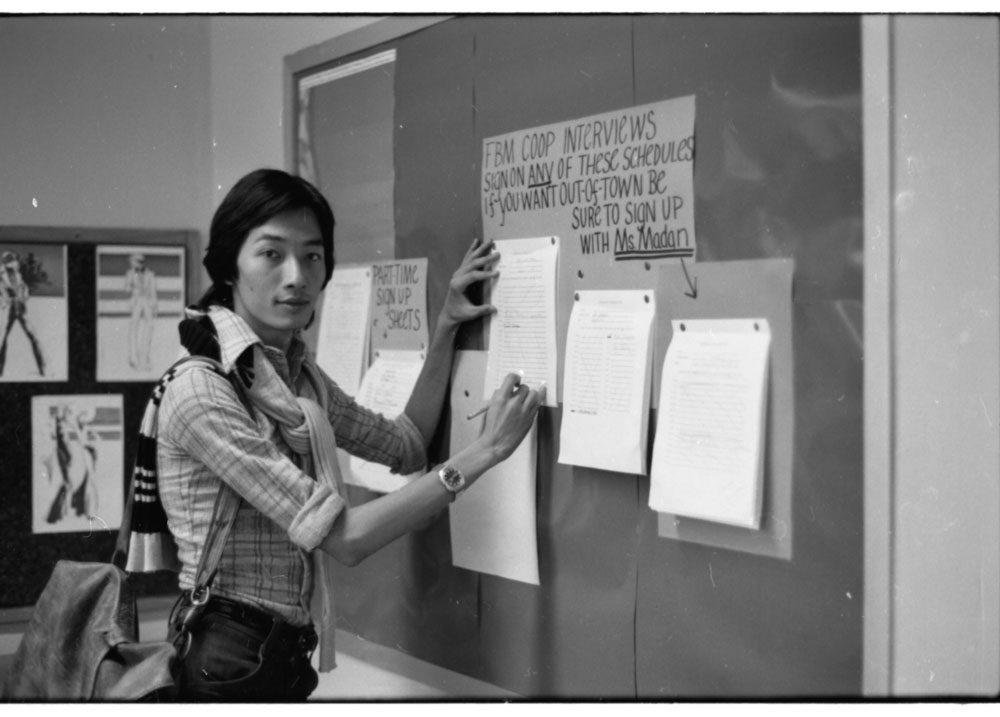
Philip Au-Yeung had been designing clothes since he was seven years old. By the time he was nineteen, his skills had earned him a transatlantic scholarship and a place in the short, luminous history of Hong Kong fashion.
In his own words, Au-Yeung’s early talent for dressing came naturally. His mother, one of the best-dressed women in Hong Kong, had a lasting influence on his navigation of the clothing world long before formal training. His first professional break to show off his skill came in Lane Crawford’s Sunday fashion spreads, where he created the elegant weekly fashion illustrations in the 1960s that introduced Hong Kong readers to the season’s new silhouettes and styles. It was exacting work, seen by the public, and it established Au-Yeung’s name in the business before he left Hong Kong.
In December 1968, the South China Morning Post announced an extraordinary opportunity from the Hong Kong General Chamber of Commerce and the Ready-to-Wear Fashion Festival Committee: a $20,000 scholarship competition offering two years of study in fashion design at the Fashion Institute of Technology in New York. The winner would be expected to return to Hong Kong upon completion of the program and commit to a three-year salaried contract with a local design institution. By March 1969, Philip Au-Yeung, nineteen years old, was named the winner and bound for New York.
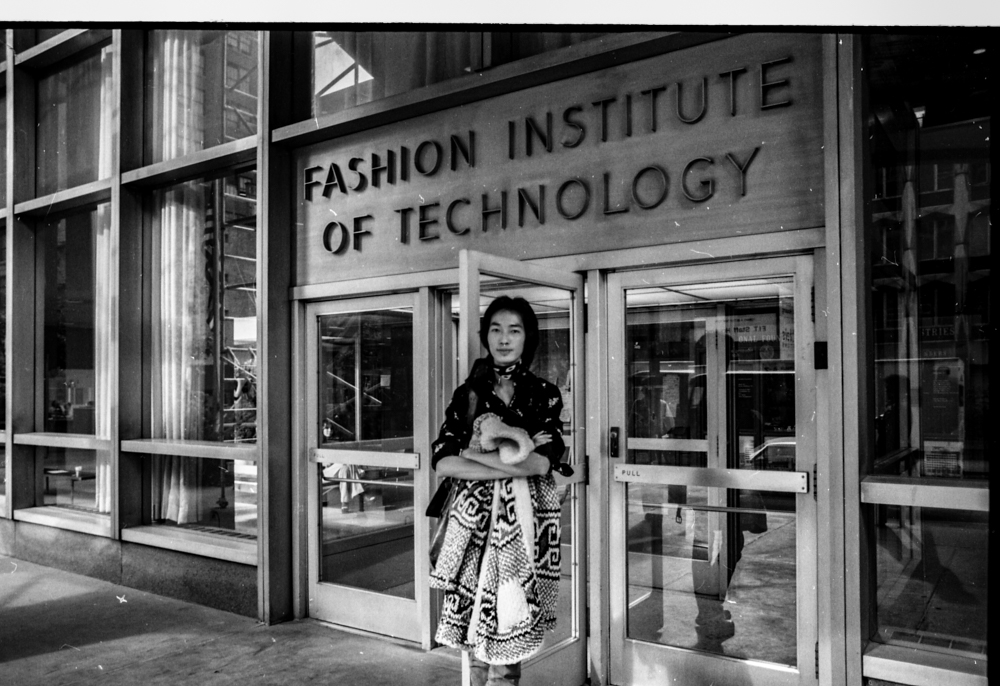
Philip Au-Yeung at the Fashion Institute of Technology, October 25, 1973. Photograph taken by Emile Bocian, Museum of Chinese in America (MOCA) Collection.
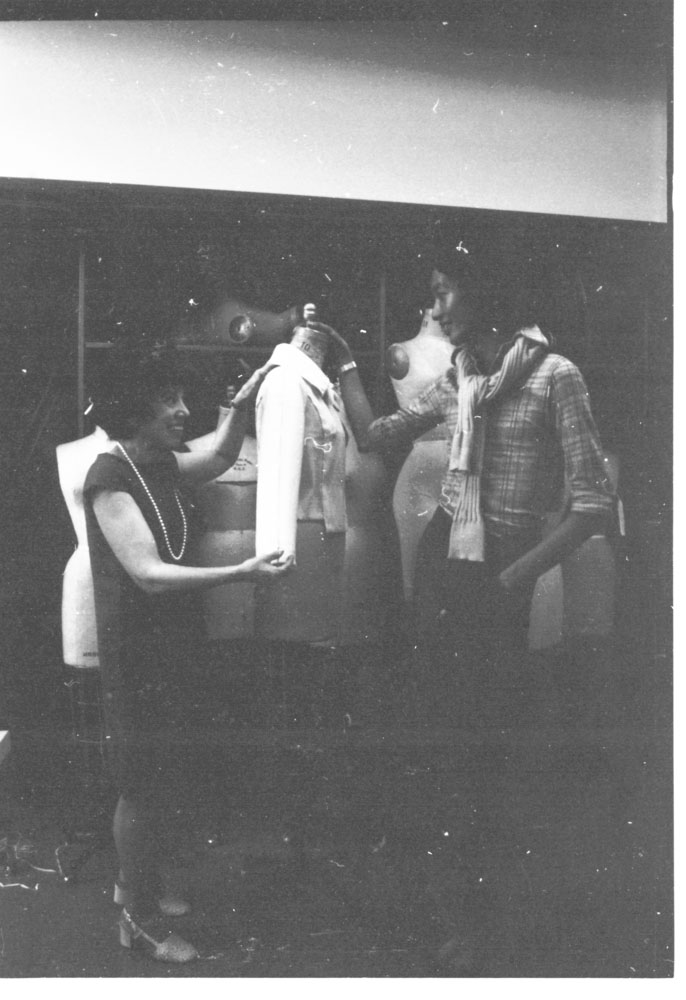
Philip Au-Yeung and an FIT professor examining a mannequin with a half-made toile of a button up shirt, September, 1973. Photograph taken by Emile Bocian, Museum of Chinese in America (MOCA) Collection.
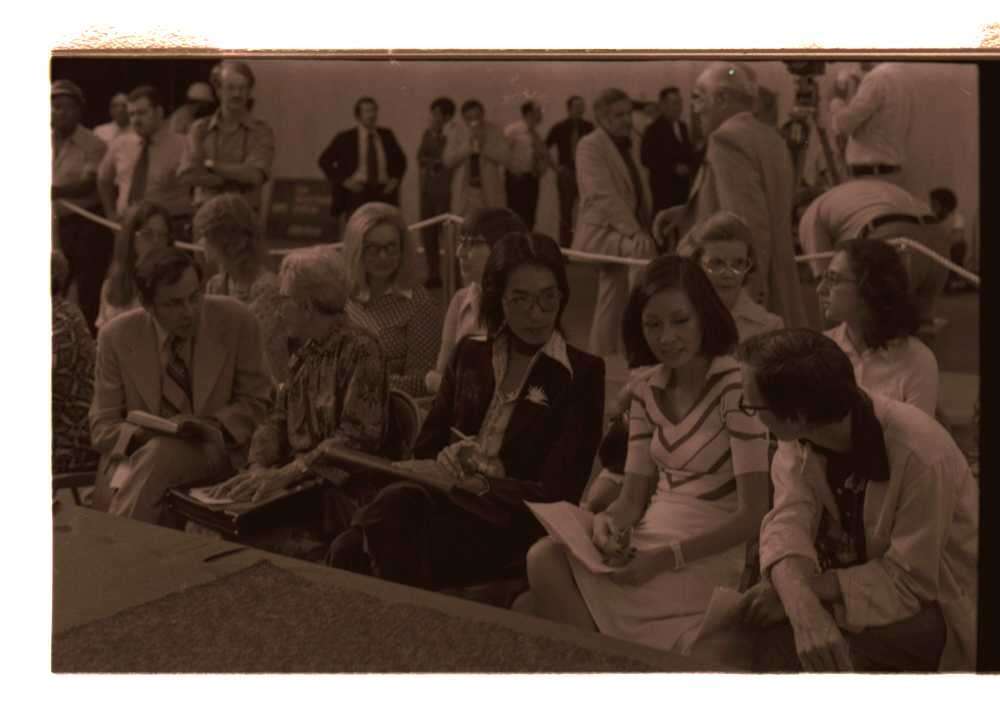
Philip Au-Yeung sitting with Jeane Tao in the front row of a Hess department store fashion show titled “Hess’s Asian Adventure,” August 29, 1973. Photograph taken by Emile Bocian, Museum of Chinese in America (MOCA) Collection.
Au-Yeung made it clear that his two years at FIT had an impact on him. When he returned to Hong Kong, he commented that the local fashions still lacked individuality. People in New York, however, were taking that quality to the extremes. The observation showed that Au-Yeung had been paying attention. He had left the country with an eye for design and came back with a sense that Hong Kong fashion was capable of so much more.
Back in Hong Kong, Au-Yeung resumed his work as one of its most gifted fashion illustrators at a pivotal moment. In the 1970s, when many manufacturers scrambled to complete garments in time for presentations, image promotion depended on illustrators who could translate the essence of a design into a compelling visual form. Au-Yeung and fellow illustrator Lee Hon-ming, who would later become chief designer for Puma and an early contributor to Hong Kong Fashion Week, together shaped the visual language through which Hong Kong fashion was seen and understood at home and abroad. In a later interview with Lee Hon-ming, shortly before his death, both men were recorded as having “made invaluable contributions to the establishment of the fashion image of that time.” Both designers, the same interview noted, died young.
It is impossible to say what the full magnitude of Philip Au-Yeung’s contributions might have been. But he did leave behind a lasting body of work and legacy in the regular Sunday illustrations that pulled a generation of readers into the subject of fashion as a lively and immediate enterprise; in his FIT-honed line of questioning, turned unflinchingly back on the city that surrounded him; and through a memorial scholarship in his name in the School of Fashion and Textiles at Hong Kong Polytechnic University, a recognition that his footsteps, if only for a short while, were merit-worthy of emulation for the next generation of contributors to the profession.
By Vivian Yip