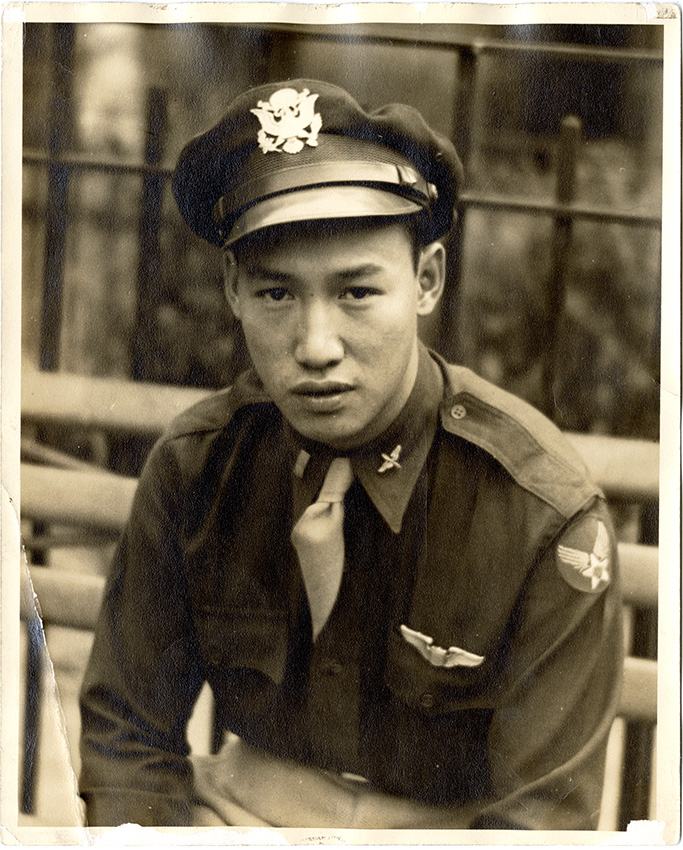
As a U.S. Army Air Forces bomber pilot, Lt. Benjamin Ralph Kimlau bravely flew missions critical to the Allied victory in the Pacific during World War II.
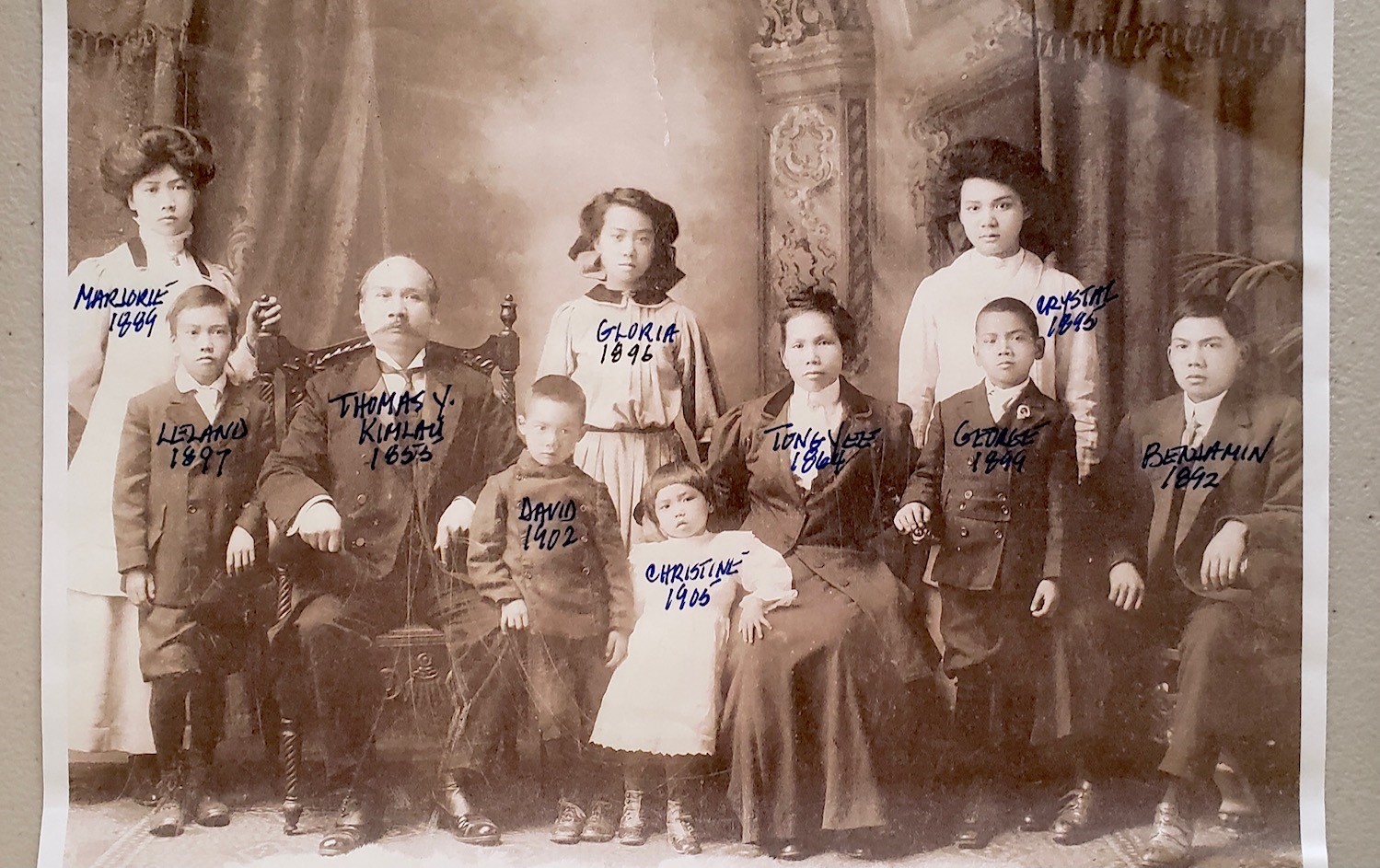
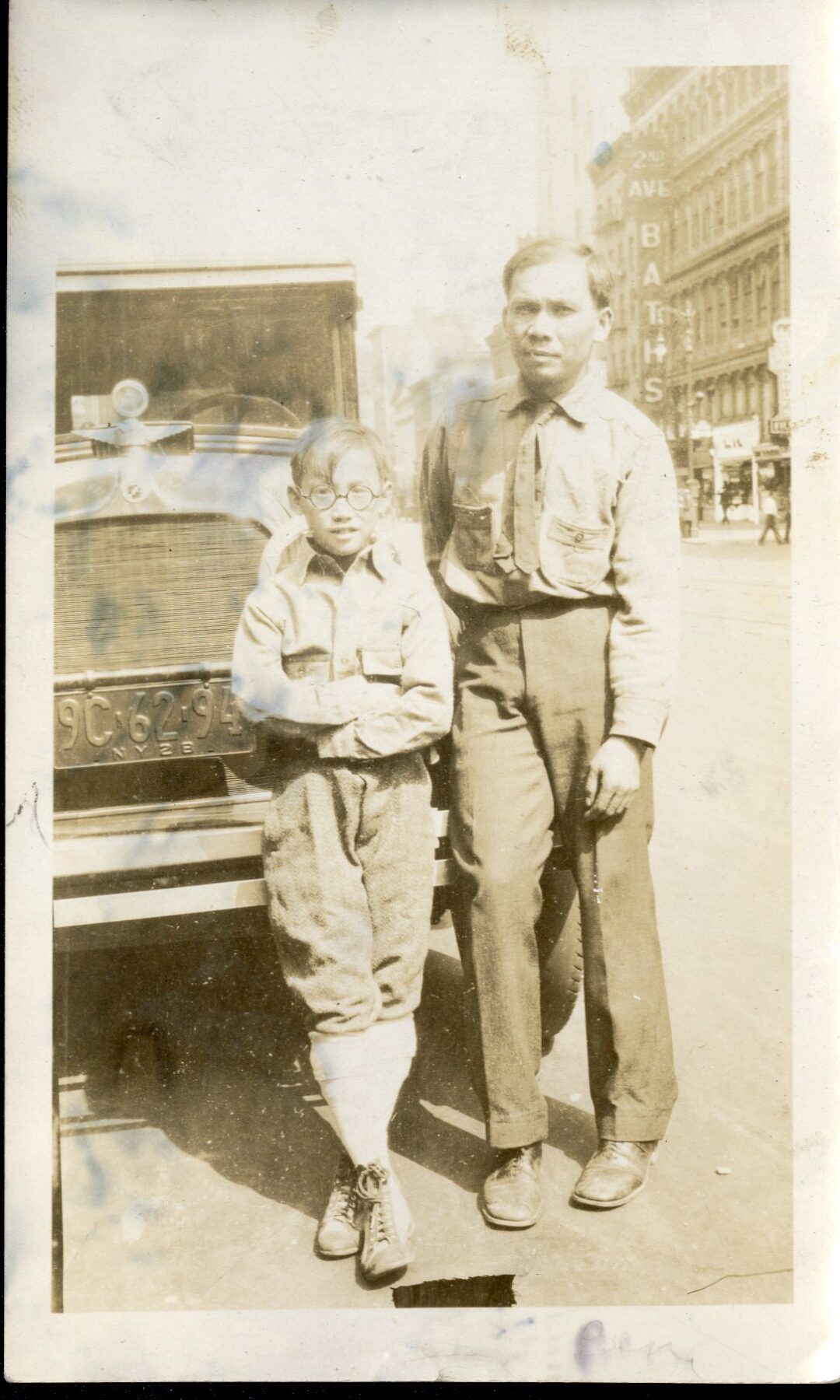
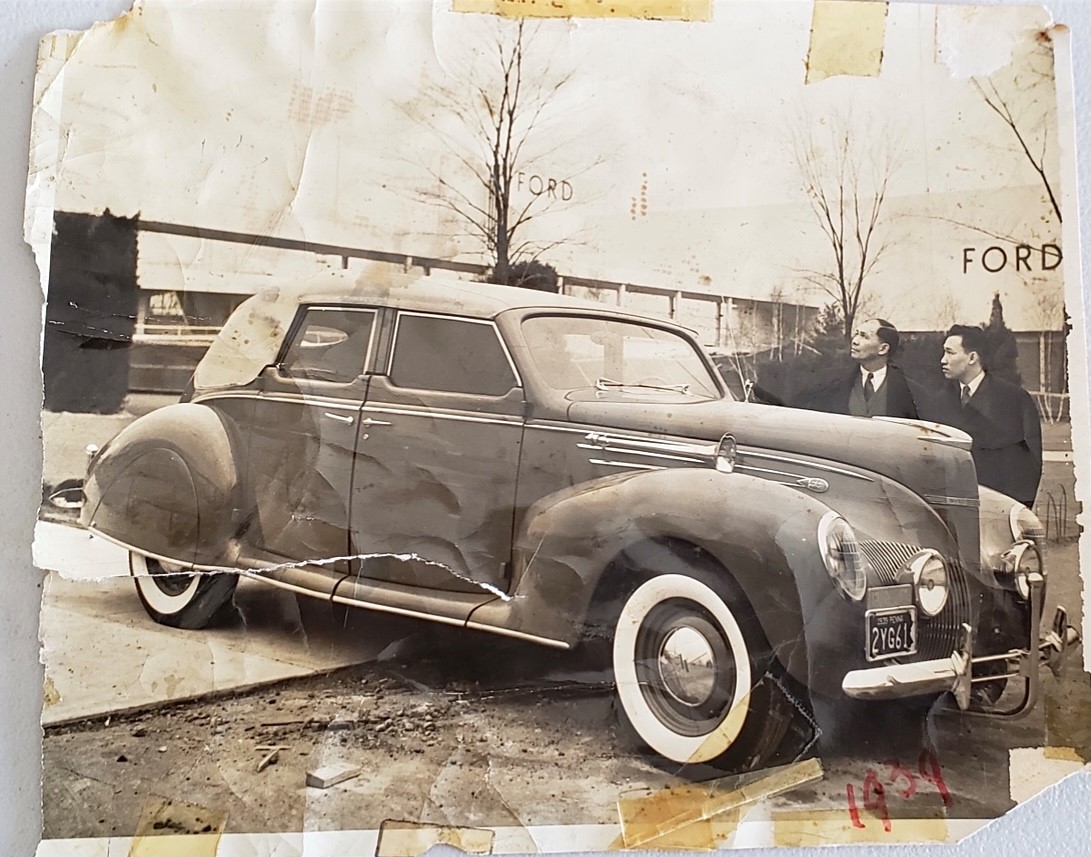
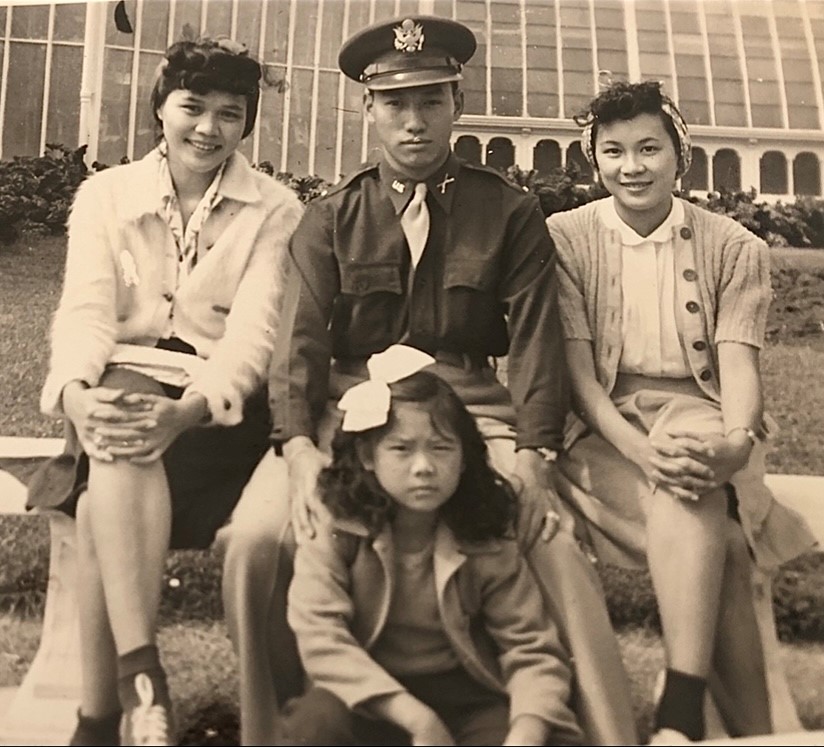
Kimlau, known as “Ralph” to friends and family, was born on April 10, 1918 in Concord, Massachusetts. He was the only child of Florence and Benjamin Kimlau, a Boston-based chemist then residing in Woburn, Massachusetts. Both of his parents were American-born citizens: his mother was born in Goodley, California and his father originally hailed from San Francisco. Numerous photographs from his childhood in Massachusetts capture Kimlau on road trips with his father, whose love of cars took them on adventures across the country. In 1932, when Kimlau was fourteen, he moved with his parents to New York City. There, he attended Dewitt Clinton High School in the Bronx, while his father worked as a mortician at 33 Mott and later 28 Mulberry Street. According to family memory, his father ran one of the earliest Chinese funerals homes providing funerary services to the community.
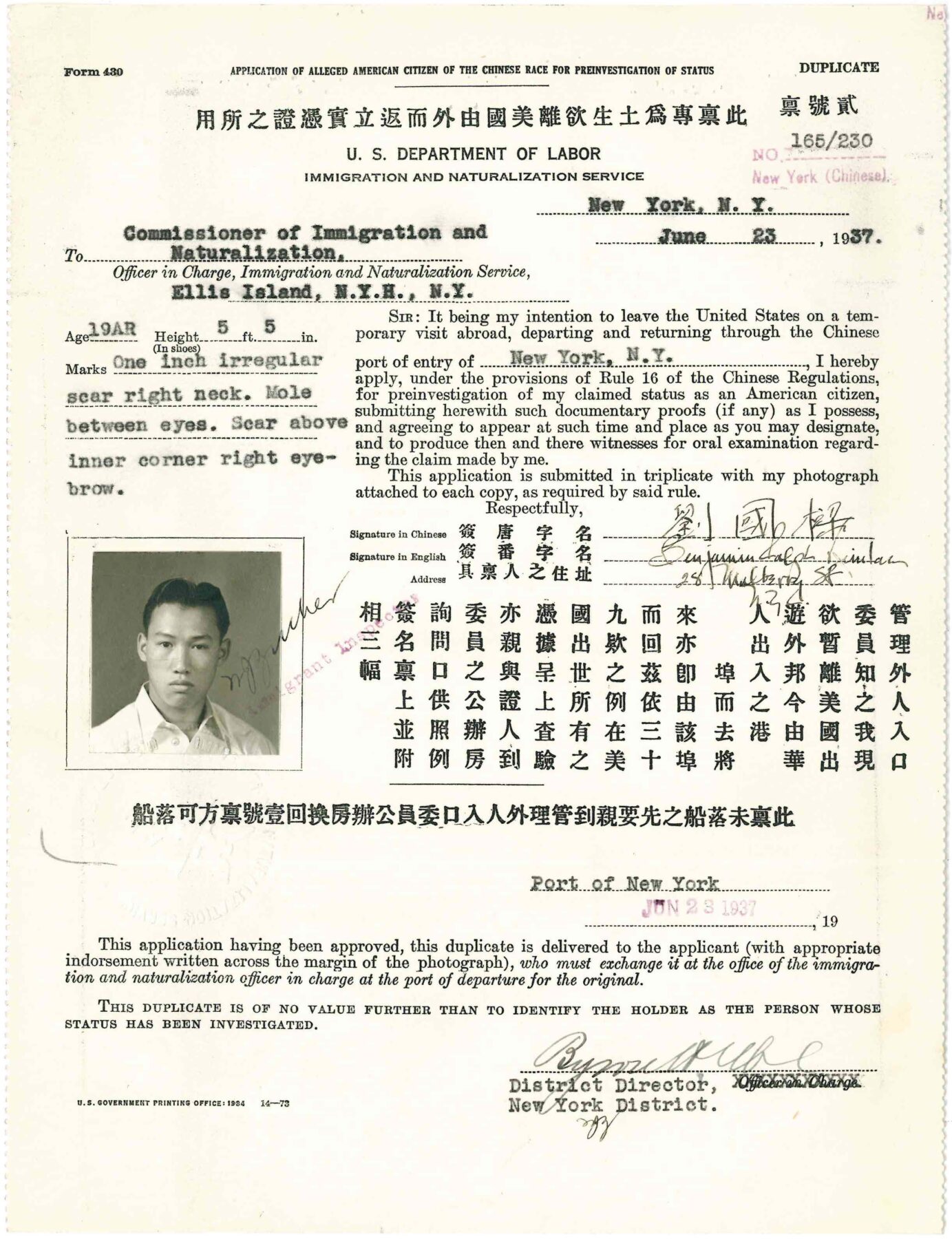
In 1937, while a student at Washington Square College of New York University, Kimlau applied for a citizen’s return certificate (Form 430) from the U.S. Immigration and Naturalization Service in order to travel to Beijing for school. Although he was a U.S. citizen, he needed this document to secure re-entry under the restrictions of Chinese Exclusion. His father had previously applied for a return certificate on his behalf in 1932, intending to send him to his home village for Chinese schooling, but Kimlau did not end up going, making his departure in June of 1937 his first trip outside of the country. His stay in China, however, was cut short by the escalating war with Japan, and by the end of January 1938, he returned home aboard the S.S. President Coolidge.
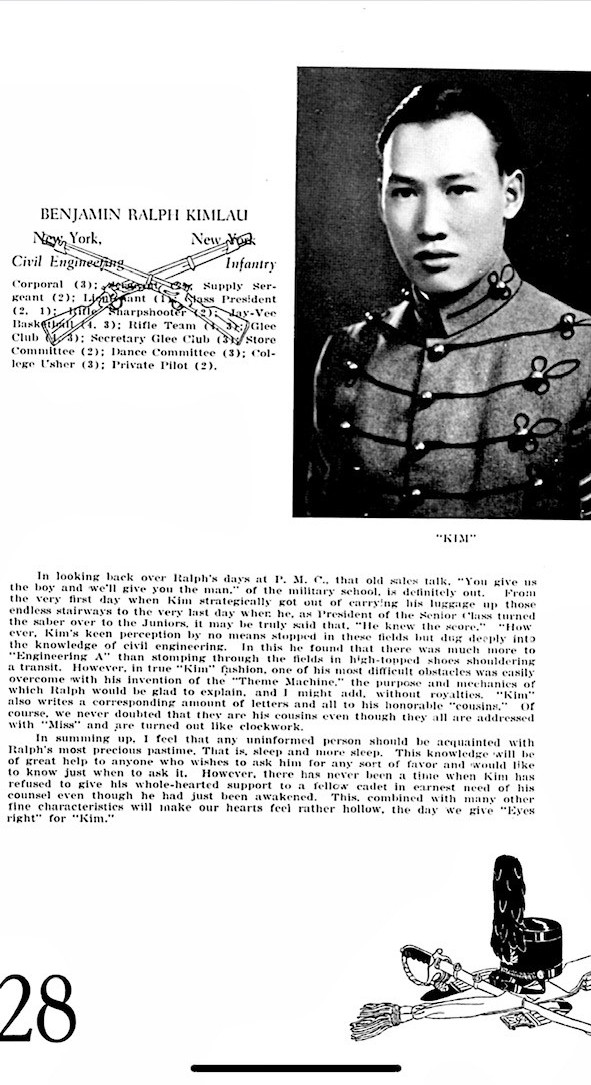
Upon returning, Kimlau enrolled at Pennsylvania Military College (now Widener University) with the intention of being commissioned into the U.S. military. A page of his senior college yearbook from this time paints a portrait of a bright, dependable, engaged young man. Senior Class President, JV Basketball, Rifle Team, Glee Club, Dance Committee, and Private Pilot were among his many extracurricular and leadership roles. Nicknamed “Kim” by his fellow cadets, he was noted for his deep knowledge of civil engineering (his chosen field of study), his fondness for sleep, his wholehearted support of fellow cadets seeking counsel, and his faithful writing of letters “turned out like clockwork” and always addressed to a “Miss.”
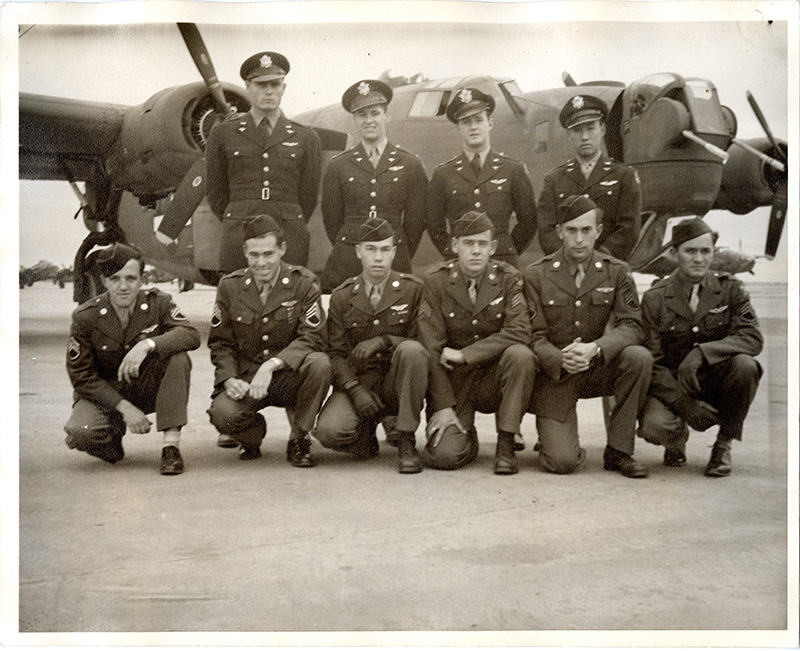
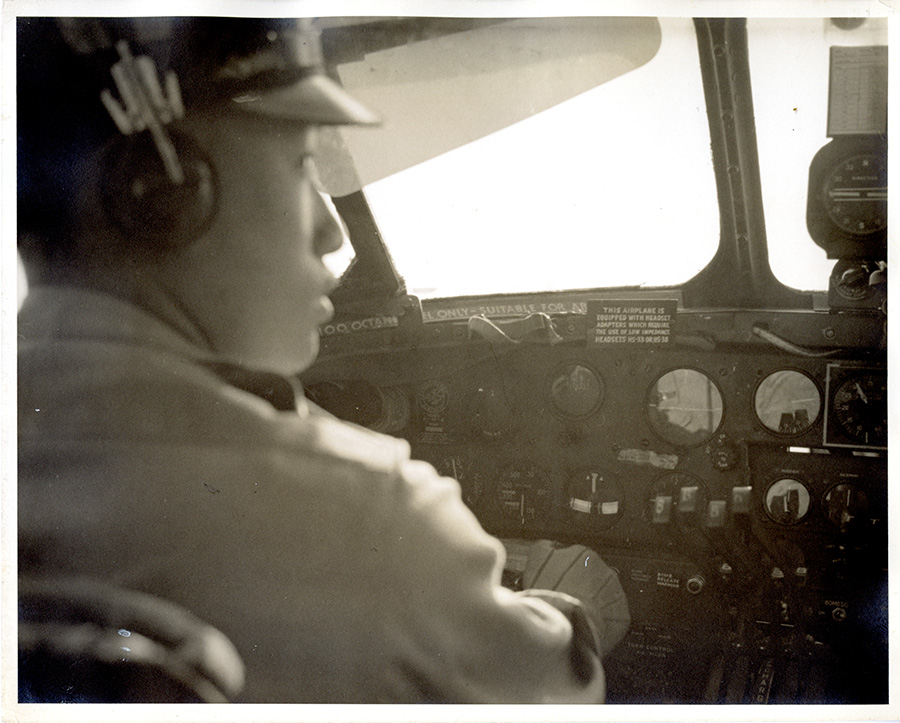
After graduating with honors in 1942, Kimlau was commissioned as a second lieutenant in Field Artillery but later transferred to the Air Forces, where he received bomber pilot training and learned to skillfully fly the challenging B-24 Liberator, a massive long-range bomber requiring a crew of 7-10 to operate effectively in combat. Upon completing his training, he was assigned to the 380th Bombardment Group—known as the Flying Circus— which conducted vital bombing operations from airbases in Fenton, Australia and Papua New Guinea. Between May 1943 and March 1944, Kimlau and his crew flew seven recorded missions, which tested his endurance as they were some of the longest flights during the war, averaging 12-14 hours in duration. Though grueling, these were vital missions aimed at disrupting Japanese shipping, disabling their airfields, and supporting planned Allied assaults.
On March 5, 1944, Kimlau and his crew flew out for what proved to be their last mission. Shortly after taking off, Kimlau and his crew experienced mechanical trouble in the air, as an engine began trailing smoke and its left wing dropped to near vertical. When the plane crashed, the bombs it carried remained unexploded and the fuel unignited, but tragically, the entire crew was killed.
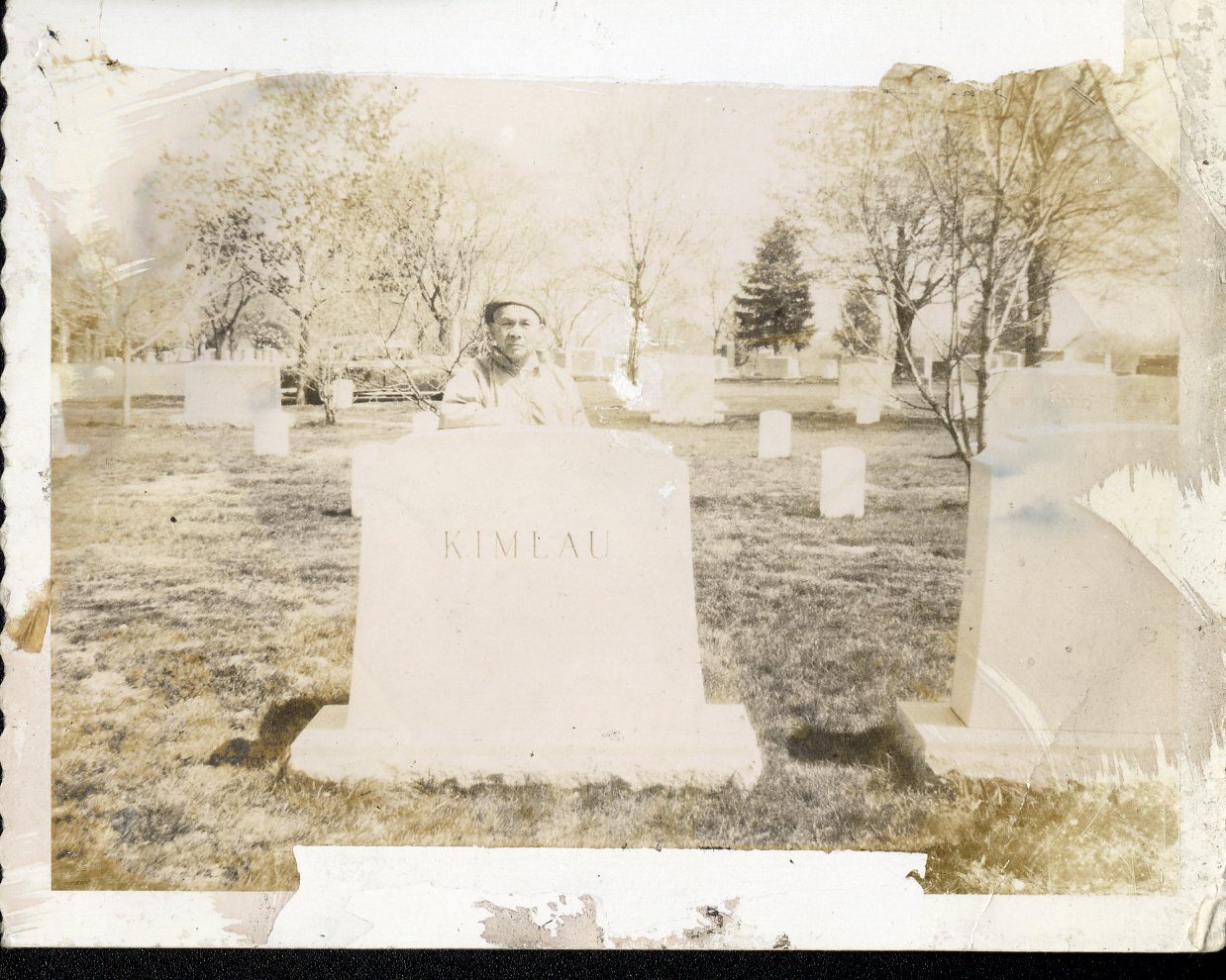
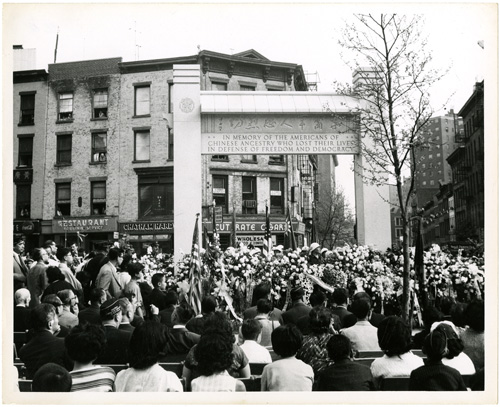
In memory of his courage and sacrifice, returning Chinese American veterans honored Kimlau as a hometown hero through the establishment of the American Legion Lt. B.R. Kimlau Chinese Memorial Post 1291. In 1958, the Post successfully petitioned the City of New York to build the Kimlau War Memorial in New York Chinatown. Completed in 1962, it served as tribute to Kimlau and all Chinese American soldiers who, despite a long history of Chinese Exclusion, answered the call to serve their country and made the ultimate sacrifice during World War II.