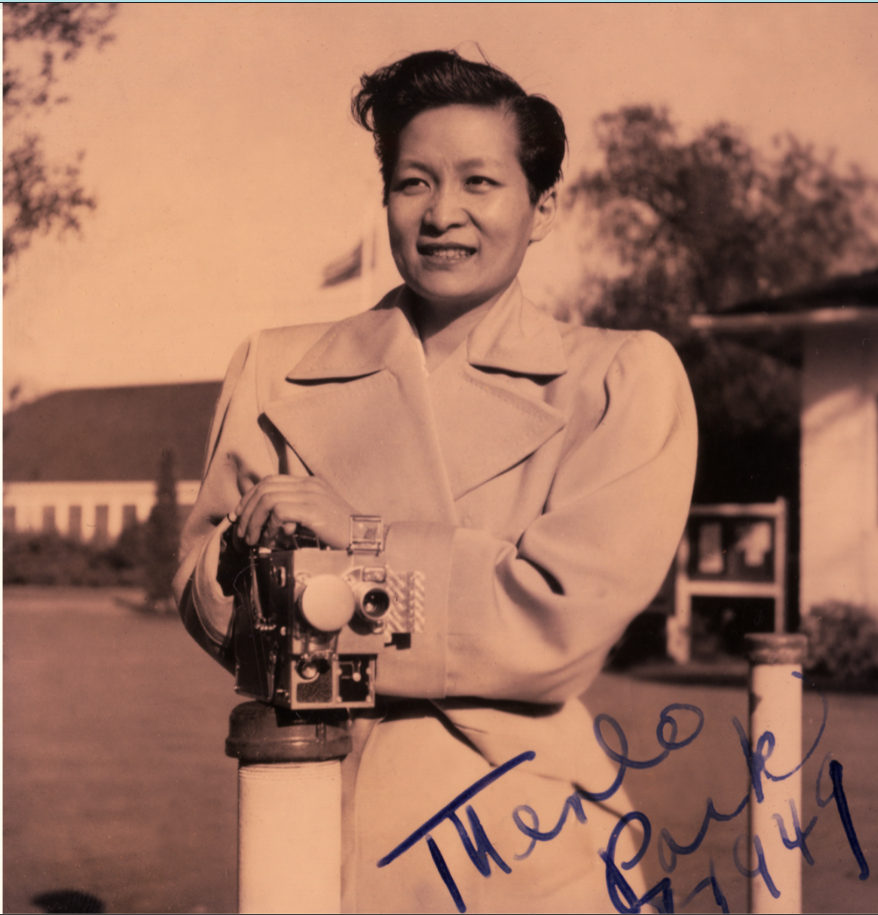
Esther Eng, born Ng Kam-ha (伍錦霞) in San Francisco on September 24, 1914, was the fourth of ten children in a Chinese American family whose roots in the United States spanned three generations, beginning with her grandfather’s immigration from Taishan in the late nineteenth century. During her childhood—a golden age for Cantonese opera in the United States—Eng and her family frequently attended performances at the Mandarin Theatre on Grant Avenue, just three blocks from their home. As a teenager, Eng worked in the Mandarin Theatre’s box office as it transitioned into a hybrid movie house and live performance venue with the advent of sound films. The job allowed her to watch movies for free while also providing opportunities to socialize with the theater’s Cantonese opera stars. It was here that she and her family likely watched some of the first Cantonese talkies, which drew actors and storylines from Cantonese opera and later depicted China’s resistance against Japan.
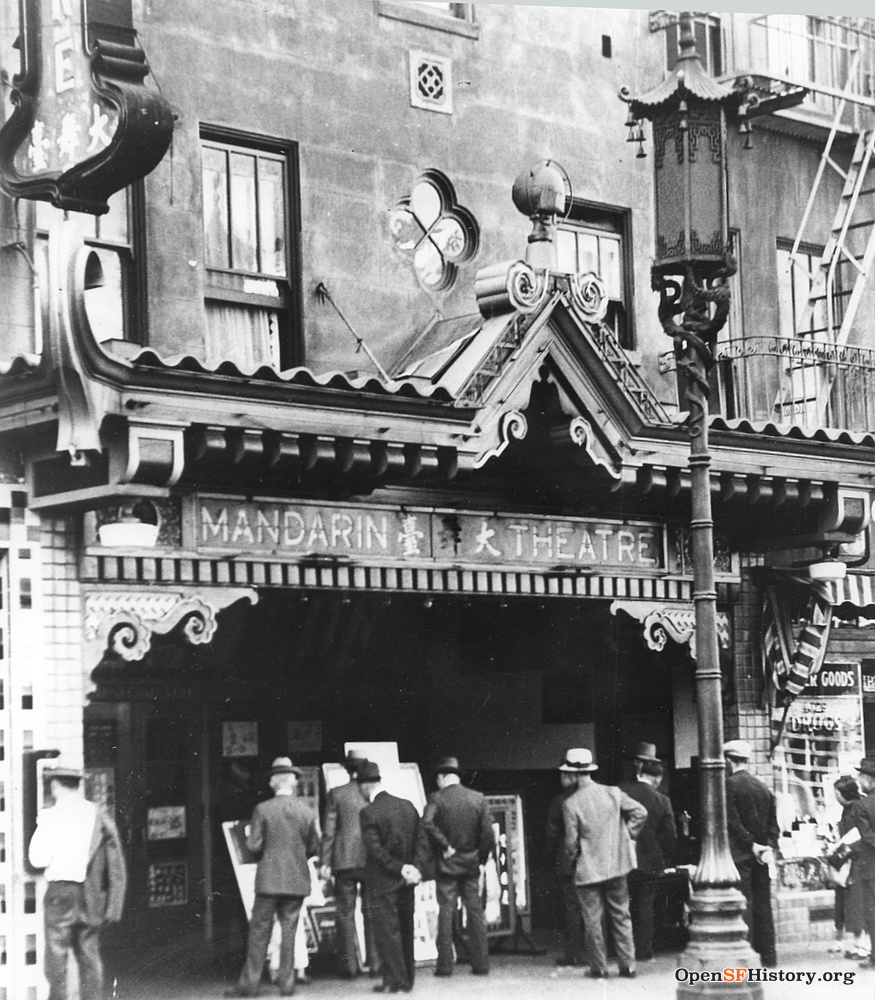
The Mandarin Theatre, located at 1021 Grant Avenue in San Francisco, three blocks from Esther Eng’s home. The theater nurtured Eng’s early love for the performing arts and it was here that Eng went to watch countless movies and Cantonese opera performances as a child and teenager. Reprinted from OpenSFHistory website.
Roused by patriotism and inspired by the success of these films, her father, the merchant Ng Yu-jat, founded Kwong Ngai Talking Picture Company (Cathay Pictures Ltd), and supported his daughter’s filmmaking aspirations by hiring Eng as co-producer of its first film, Heartaches (心恨, 1935), screened at the Mandarin Theatre in February 1936. Despite having no formal training and being the youngest and least experienced person on set, Eng proved herself capable of confidently and effectively working with industry professionals. To bring the project to life, she rented a studio on Sunset Boulevard in Los Angeles and enlisted noted talents such as cinematographers Paul Ivano and James Wong Howe to help produce the first Chinese-language film made in Hollywood. Reflecting the patriotic themes of the era while centering a female protagonist, the film told the tragic love story of a local Cantonese opera singer—played by the trained opera performer Wai Kim-fong, Eng’s childhood friend and likely romantic partner—and a pilot training in the United States, whose affections she selflessly renounces so that he would return to China to fight in the Sino-Japanese War. Eng received a warm welcome when she traveled to promote the film in Hong Kong, encouraging her to register a branch of her family’s film company and stay to make films.
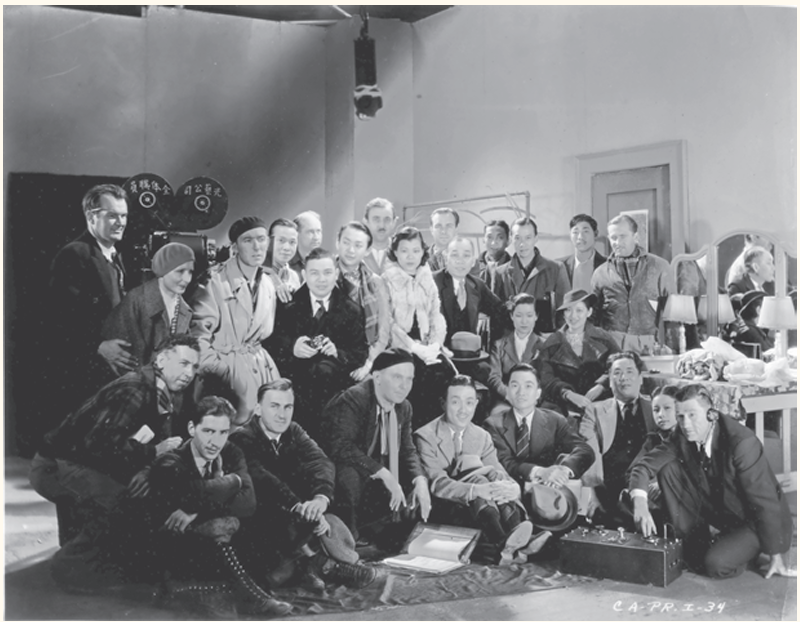
Esther Eng and the crew of Heartaches (心恨, 1935). Reprinted from Law Kar, “In Search of Esther Eng: Border-Crossing Pioneer in Chinese-Language Filmmaking,” in Chinese Women’s Cinema: Transnational Contexts (Columbia University Press, 2011).
The first film she directed—National Heroine (民族女英雄, 1937)— portrayed a female pilot who enlists in the military to fight for China’s national defense. The film reflected an emergent model of China’s independent “New Woman” and drew on the global fascination with female aviators to highlight the growing opportunities for women to actively support the war. However, Eng’s portrayal pushed beyond contemporary reality, for in fact, women volunteers who traveled to China to enlist in its air force as pilots such as Hazel Ying Lee were refused, and there remained considerable resistance to placing women in direct combat roles. Nevertheless, for her daring and positive representation of women’s wartime role, Eng was recognized with an award from the Cantonese Women’s Association.
Before the war’s expansion forced her to leave Hong Kong in October 1939, Eng directed an additional four films, each for different film companies: Ten Thousand Lovers (1938) for Grandview, Tragic Love (1938) for Tianle, A Night of Romance A Lifetime of Regret (1938) for Great Star, and It’s a Women’s World (女人世界, 1939) for Wode.
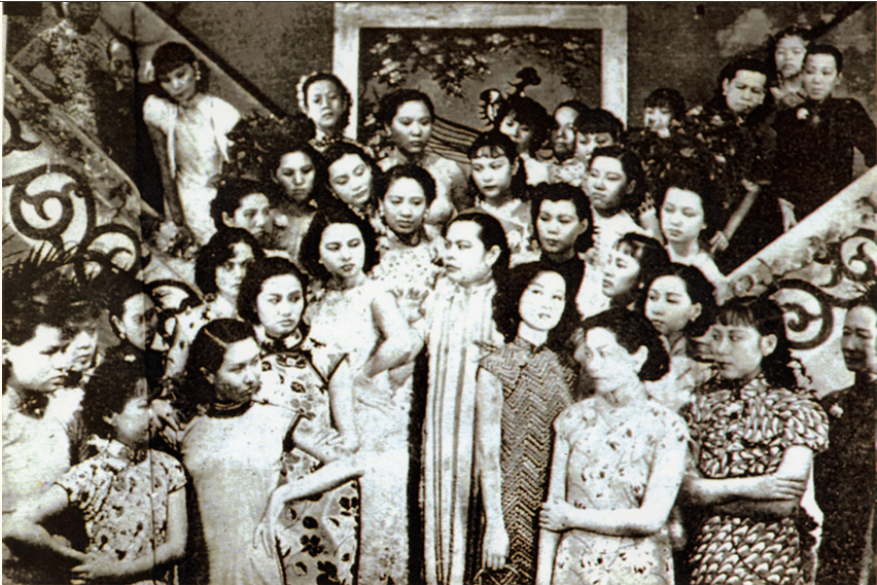
The cast of It’s a Woman’s World (女人世界, 1939), advertised as the first Hong Kong-produced film featuring an all-female cast of 36 actresses. Reprinted from S. Louisa Wei, “Finding Voices Through Her Images: Golden Gate Girls as an Attempt in Writing Women Filmmakers’ History” Feminist Media Histories 2, no. 2 (Spring 2016).
Billed as Hong Kong’s first film employing an all-female cast, It’s a Women’s World followed the stories of thirty-six women from varying social classes as they navigated the challenges and complexities of modern Hong Kong society, including “an old fashioned teacher, a fashionably dressed secretary, a clever journalist, a conscientious lawyer, a compassionate doctor, a free-spirited nightclub hostess, a decadent socialite, an unlucky divorcee, and so on.” Her film’s exclusively female cast and multifaceted portrayal of women’s everyday lives brought to the screen a bold and groundbreaking woman-centered approach to cinematic storytelling, highlighting the unique projects and perspectives Eng chose to bring to life as filmmaker.
When Eng returned to the United States, she spent several months in Hollywood observing new developments in the motion picture business. She took particular note of the studios’ B-movie production system—a Depression-era innovation characterized by low production budgets and short shooting schedules—and immediately recognized the utility of adopting it for Chinese filmmaking. Her next film, Golden Gate Girl (金門女, 1941), was a collaboration with exile Hong Kong filmmakers Joseph Sunn Jue and Kwan Man-ching, as disruptions in Hong Kong and Shanghai due to war made San Francisco emerge as a new hub for Chinese filmmaking.
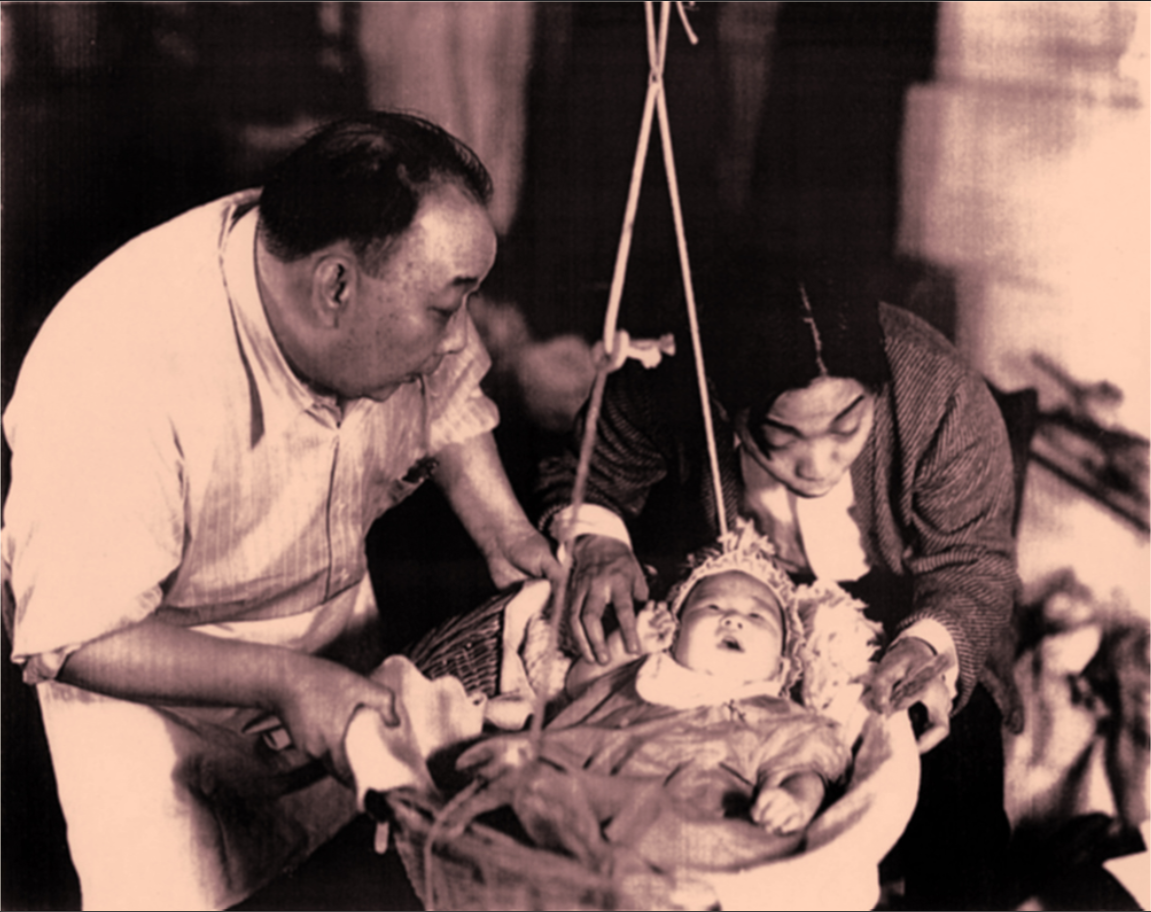
Scene from the film, Golden Gate Girl (金門女, 1941), showing the protagonist Lulu, played by a baby Bruce Lee, being taken in by foster parents who open a laundry business to raise her. Reprinted from S. Louisa Wei, “Esther Eng,” in Women Film Pioneers Project (Columbia University Libraries, 2014), https://doi.org/10.7916/d8-rhpq-0f69.
A patriotic wartime film set in San Francisco, Golden Gate Girl was rich in local color, featuring scenes of daily working-class immigrant life in Chinatown, including depictions of the female protagonist and her foster parents at work in a laundry. These scenes traveled back to movie-hungry wartime audiences in Hong Kong and other Chinese cities, as reporter Betty Cornelius observed: “Thousands que [sic] daily to wait for hours in Hong Kong and other Chinese cities fortunate enough to possess moving-picture houses to see the one new Chinese picture filmed since the war. Prewar films shown repeatedly were learned by heart, and the Chinese, eager for fresh entertainment, have been crowding theatres to see Golden Gate Girl.”
In addition to making films, Eng purchased distribution rights to films during her stays in Hong Kong and traveled extensively to bring them to Chinatown communities across North and South America through her family’s film import and distribution business. After the war, Eng continued making films, including Lady from the Blue Lagoon (aka The Blue Jade, 藍湖碧玉) in 1947; Too Late for Spring (aka Back Street, 遲來春已晚/虛度春宵) in 1948, an adaptation of a Fannie Hurst bestseller that she self-financed and released through her own company, Golden Gate Silver Light Production; and Mad Fire, Mad Love ( 怒火情焰, 1949), a romance between a mixed-race woman and a Chinese sailor, reported as the first Chinese-language film produced in Honolulu.
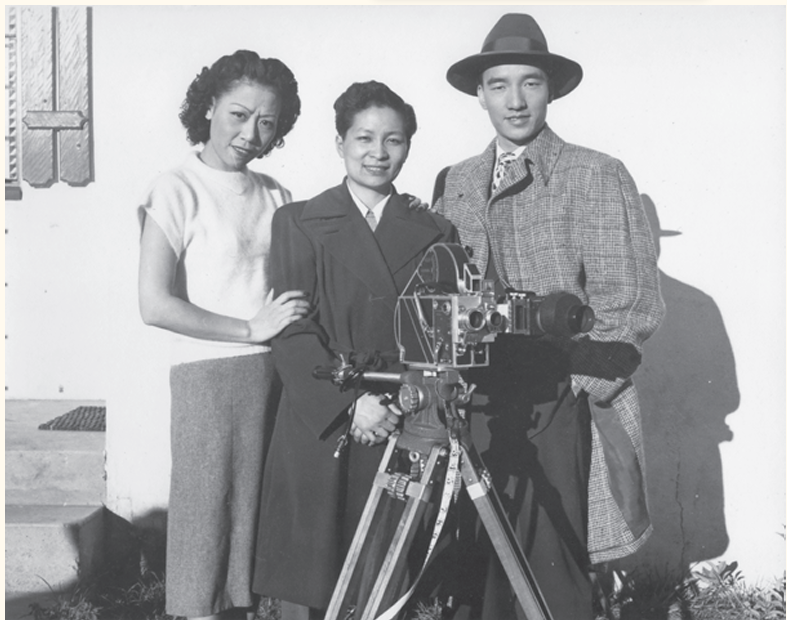
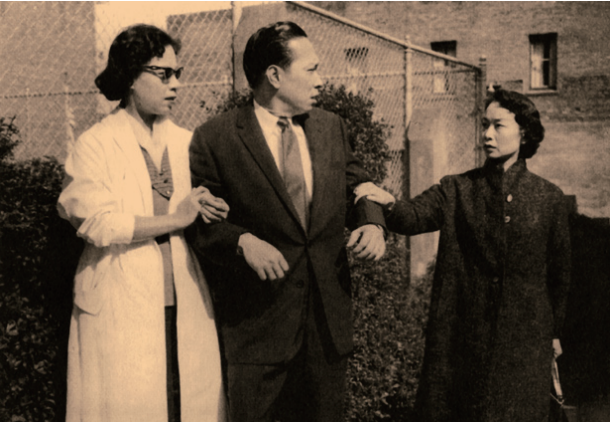
Esther Eng (center) with actors on location of Too Late for Spring (aka Backstreet), Siu Fei Fei (left) and Ronald Liu (Liu Kei-wai, right). Reprinted from Kar Lew, “In Search of Esther Eng: Border-Crossing Pioneer in Chinese-Language Filmmaking,” in Chinese Women’s Cinema: Transnational Contexts (Columbia University Press, 2011).
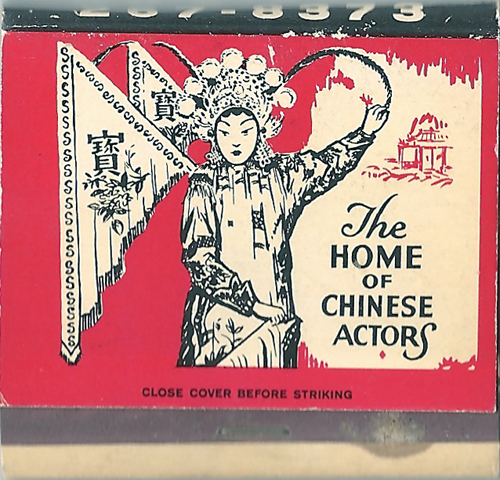
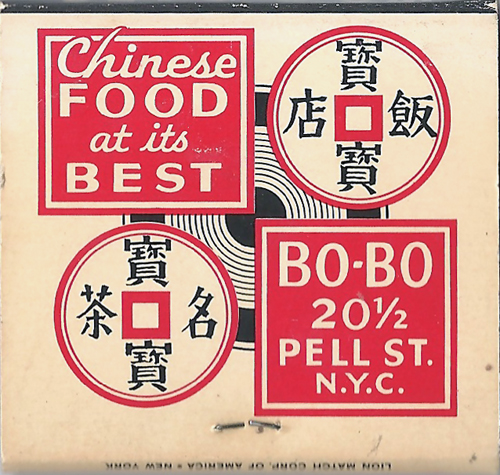
In 1950, Eng decided to step away from filmmaking and moved to New York City with Siu Fei-fei, the female lead in her most recent productions and her romantic partner at the time. They eventually settled in Manhattan’s Chinatown, in an apartment at 50 Bayard Street. Nearby, they opened Bo Bo Restaurant at 20½ Pell Street after reconnecting with an old acquaintance, Bo Bo, who was stranded in New York with his Cantonese opera troupe after the Communists claimed victory in China. Seeing an opportunity to support them, Eng took on the management of Bo Bo’s stage career and simultaneously opened the restaurant to offer Bo Bo and his troupe a place of employment while they learned English.
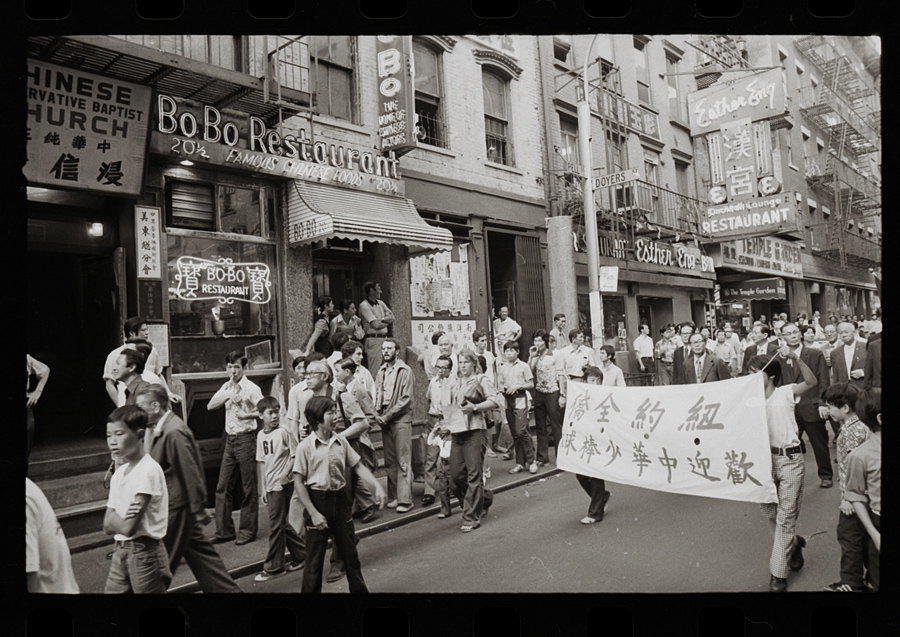
The exterior of Bo Bo Restaurant and Esther Eng Restaurant, taken during a Taiwan Little League parade along Pell Street on August 28, 1974. Photograph taken by Emile Bocian, Museum of Chinese in America (MOCA) Collection.
The restaurant quickly became a refuge for other out-of-work Chinese actors and attracted widespread acclaim catering to the well-heeled and serving popular dishes such as lobster egg rolls, bird’s nest soup, and duck with lychee.