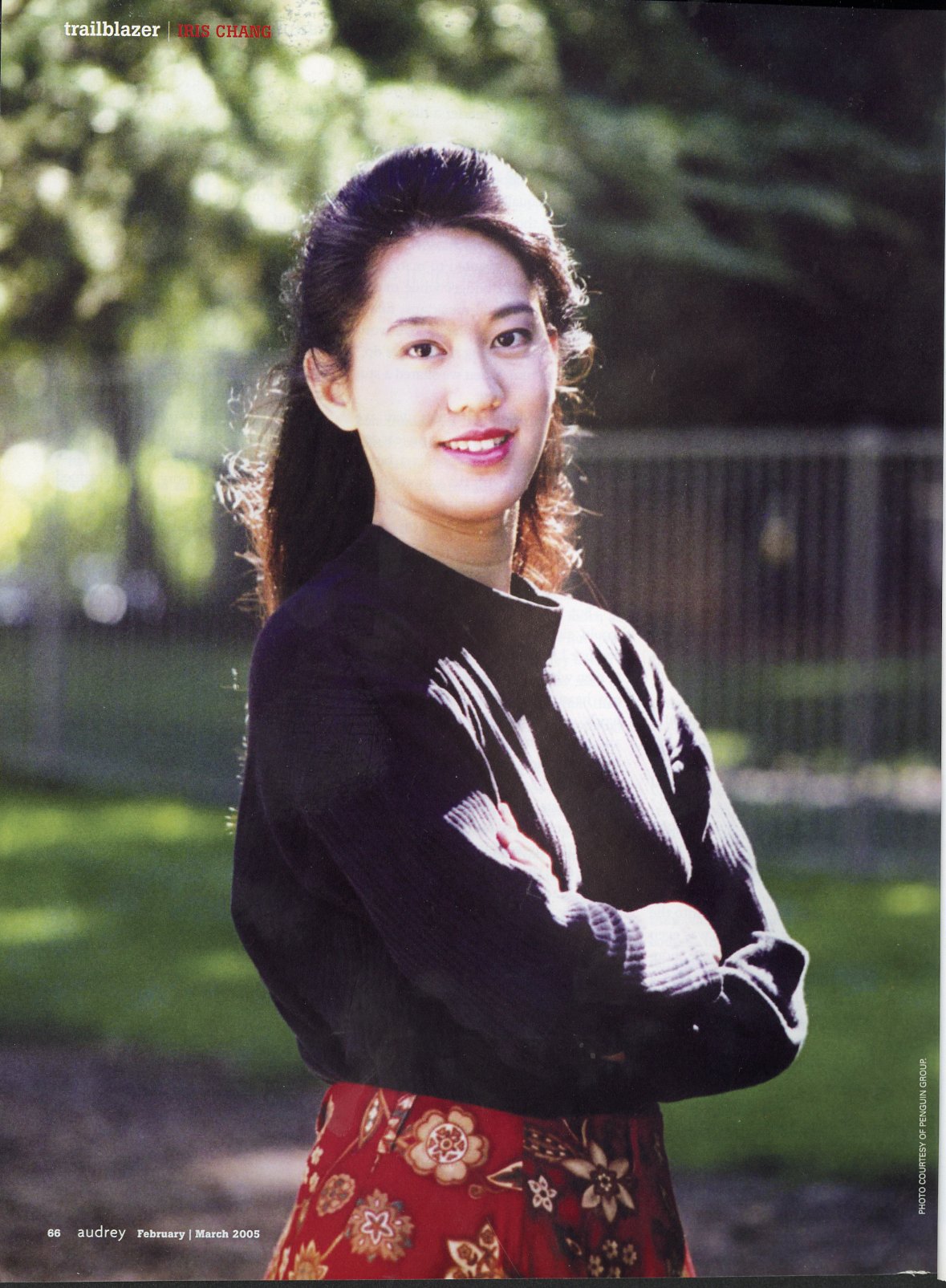
Iris Chang (張純如, March 28, 1968 – November 9, 2004) was a critically acclaimed author and investigative journalist whose evocative works brought attention to forgotten chapters of Chinese and Chinese American history, most notably the Nanjing Massacre during World War II.
Born in Princeton, New Jersey, and raised in Champaign-Urbana, Chang was not only a voracious reader but also began writing her own stories and poems as a young child. Her parents—professors of physics and microbiology at the University of Illinois who immigrated from Huai’an, Jiangsu Province—encouraged their daughter’s interests, often taking her to the library, especially in winter when there was little else to do.
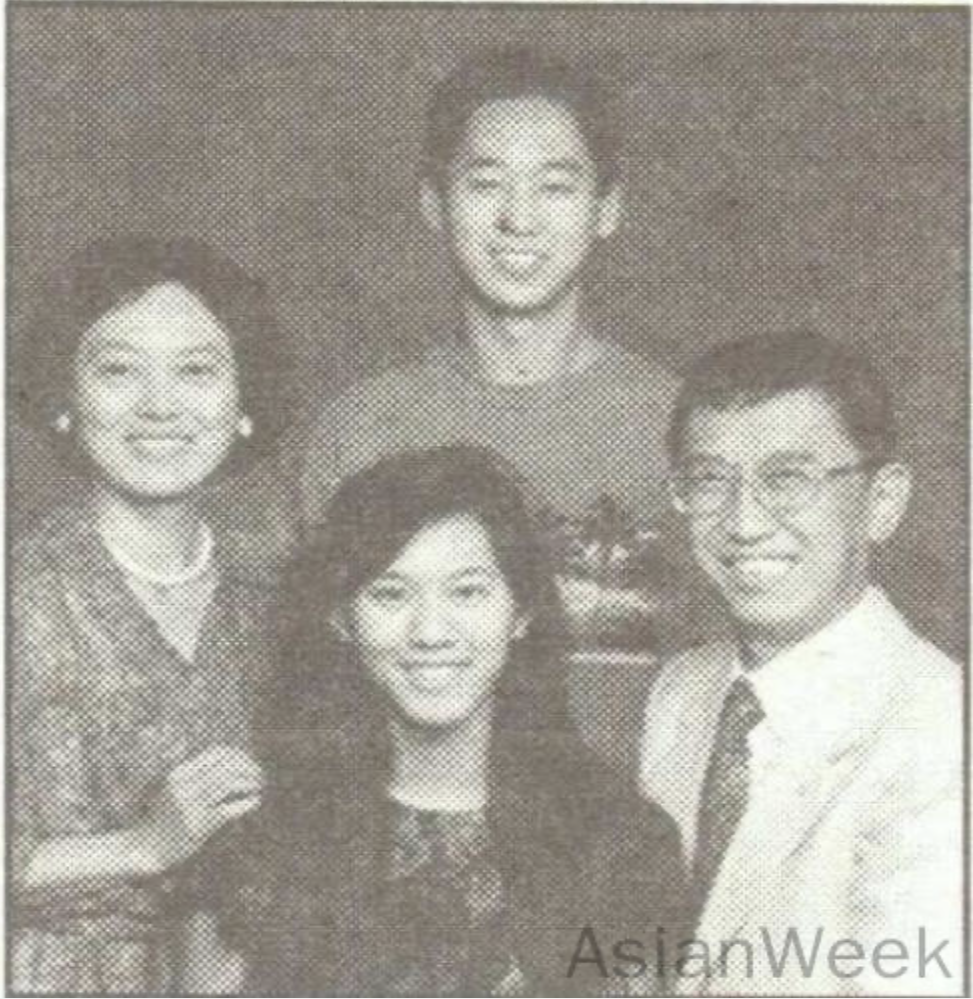
A family portrait taken during her college years: Iris Chang with her mother, YingYing, brother Michael and father, Shau-Jin. From AsianWeek, December 8, 2006, page 5 (accessed on AsianWeek Database Project).
As a journalism student at the University of Illinois, she was first introduced to the genre of literary journalism and narrative nonfiction. “I fell in love with the idea of using literary or even fictional techniques—dramatic techniques—and applying them to historical research,” she later recalled. It was this evocative storytelling ability that later prompted noted historian Stephen Ambrose to dub her “maybe the best young historian we’ve got.” After graduation, Chang briefly wrote for the Associated Press and the Chicago Tribune but quickly realized that her passion lay in producing longer-form works. Her talent won her a scholarship to hone her craft in the intensive master’s writing program at Johns Hopkins University. After graduating in 1991, she was unsuccessful in pitching her first book but persisted to become one of the youngest writers to secure a contract with Basic Books.
Her first book, Thread of the Silkworm (1995), chronicled the story of Caltech-educated scientist Tsien Hsue-shen. Despite major contributions to U.S. aeronautics and his desire to become a citizen, he was suspected of espionage and deported during the McCarthy Red Scare. Tsien went on to revolutionize China’s missile and space programs—an outcome many historians view as one of the U.S. government’s greatest strategic blunders.
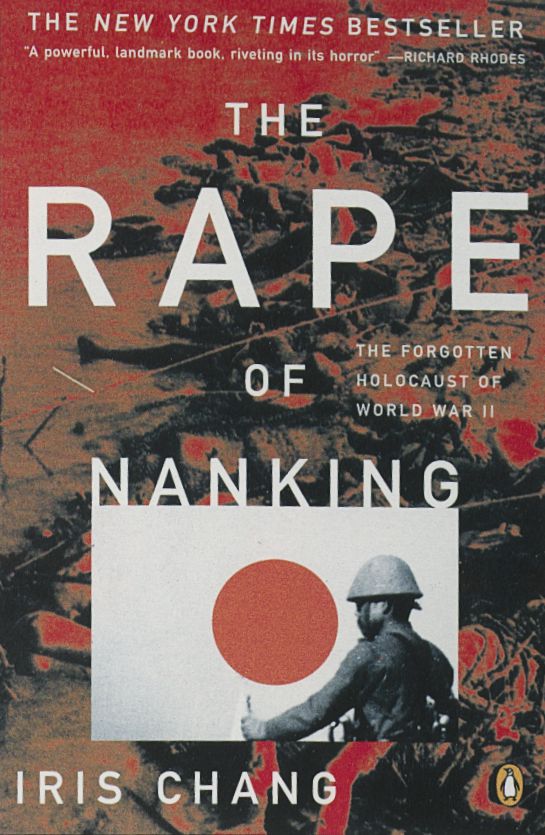
Her next book, The Rape of Nanking: The Forgotten Holocaust of World War II (1997), drew from journals, newspapers, smuggled film footage, and survivor interviews to paint a gruesome picture of Japanese soldiers boiling babies in vats of oil, horribly mutilating women after rape, and rounding up tens of thousands of men for decapitation contests. Having grown up hearing stories of her own grandparents’ escape from Nanjing and fortified by three years of meticulous research, Chang remained resolute in the face of accusations of misrepresentation from Japanese right-wingers and academics. She used her newfound visibility to become one of the most high-profile advocates for apology and reparations for surviving victims.
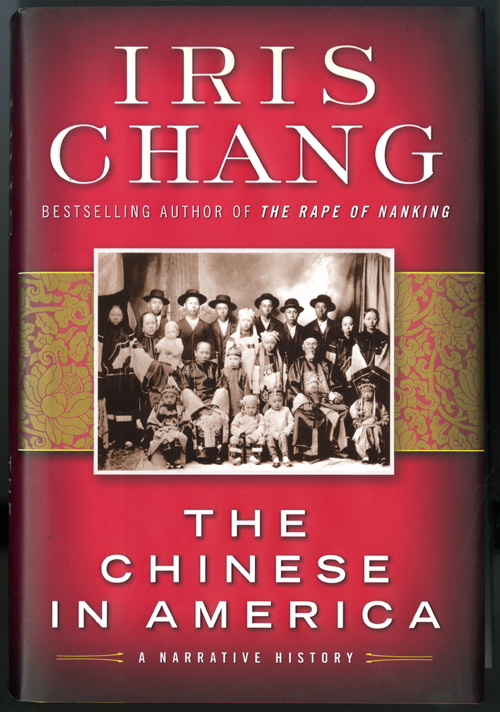
The promotion of her book and her fight for accountability took her across the country, where she had the opportunity to meet and hear the stories of countless Chinese Americans. Their stories inspired her next book, The Chinese in America: A Narrative History (2003), a sweeping tome which explored 150 years of American history through stories of Chinese Americans and immigrants who made crucial contributions to American society.
The power and impact of Chang’s writing stemmed from her ability to deeply empathize with the stories of her subjects, however, internalizing such heavy and dark stories took a heavy emotional toll. While researching her fourth book, about the experience of American G.I.s taken prisoner in the Philippines during the Bataan Death March of World War II, Chang suffered a mental breakdown and tragically took her own life. Gone too soon, we remember and miss her moral voice and courage, which time and again led her to steadfastly speak truth to power and tackle uncomfortable truths.