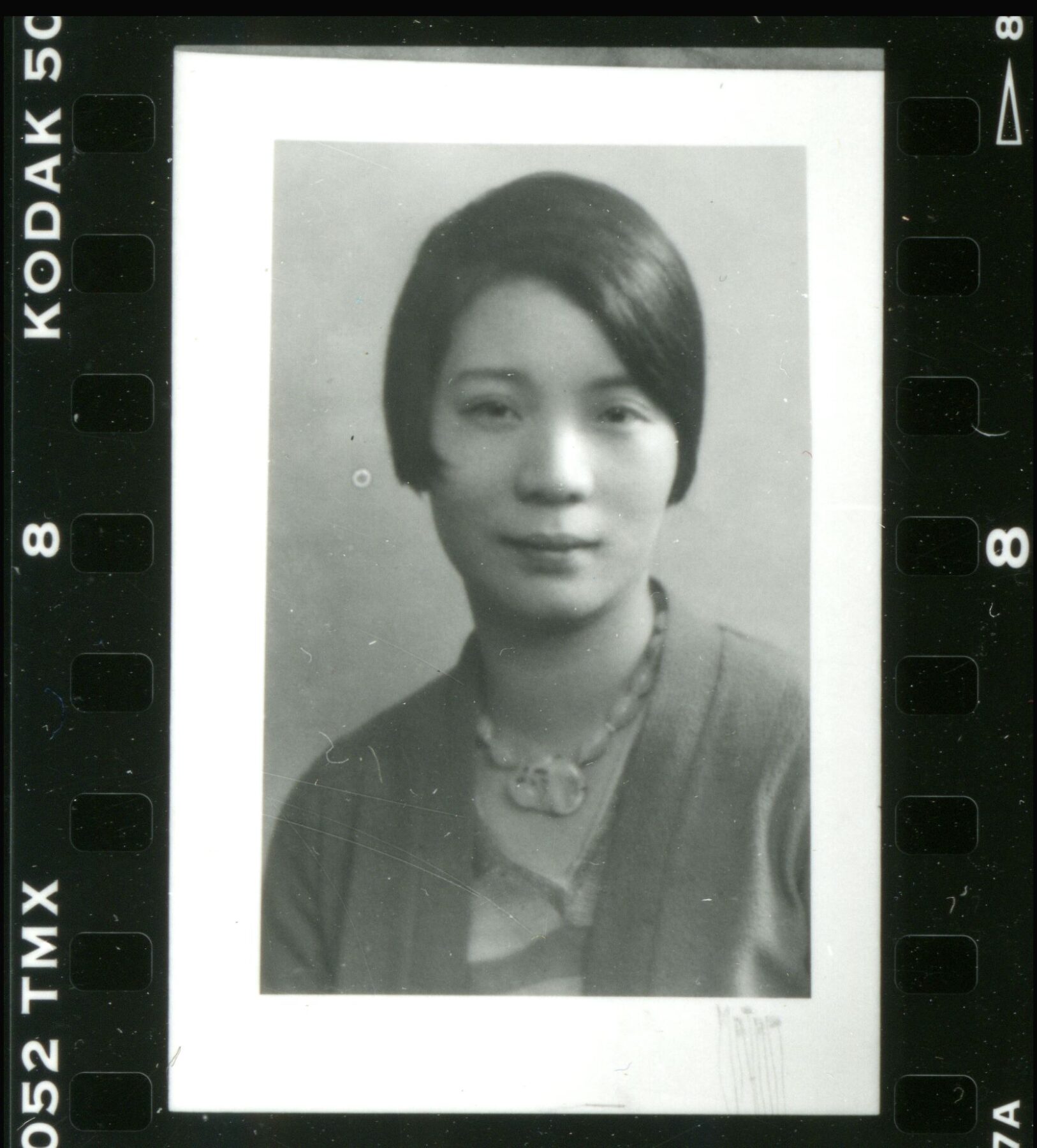
Dr. Mabel Ping-Hua Lee (1896 – 1966) was a pioneer for women’s suffrage, a groundbreaking scholar, and a dedicated leader of the First Chinese Baptist Church in New York City’s Chinatown. Born in Guangzhou, Lee learned English at a missionary school and excelled in her studies, eventually earning a Boxer Indemnity Scholarship to study in the U.S. She was very influenced by her father, Reverend Lee Towe, who traveled to the U.S. as a Baptist missionary when she was a child. Lee and her mother later joined him, arriving in San Francisco in 1901. They soon moved from the West Coast to New York City’s Chinatown, where Rev. Lee Towe was sent to the Morning Star Mission in 1904. The family became key figures in Chinatown’s community, with Rev. Lee Towe eventually becoming president of the Chinese Consolidated Benevolent Association.
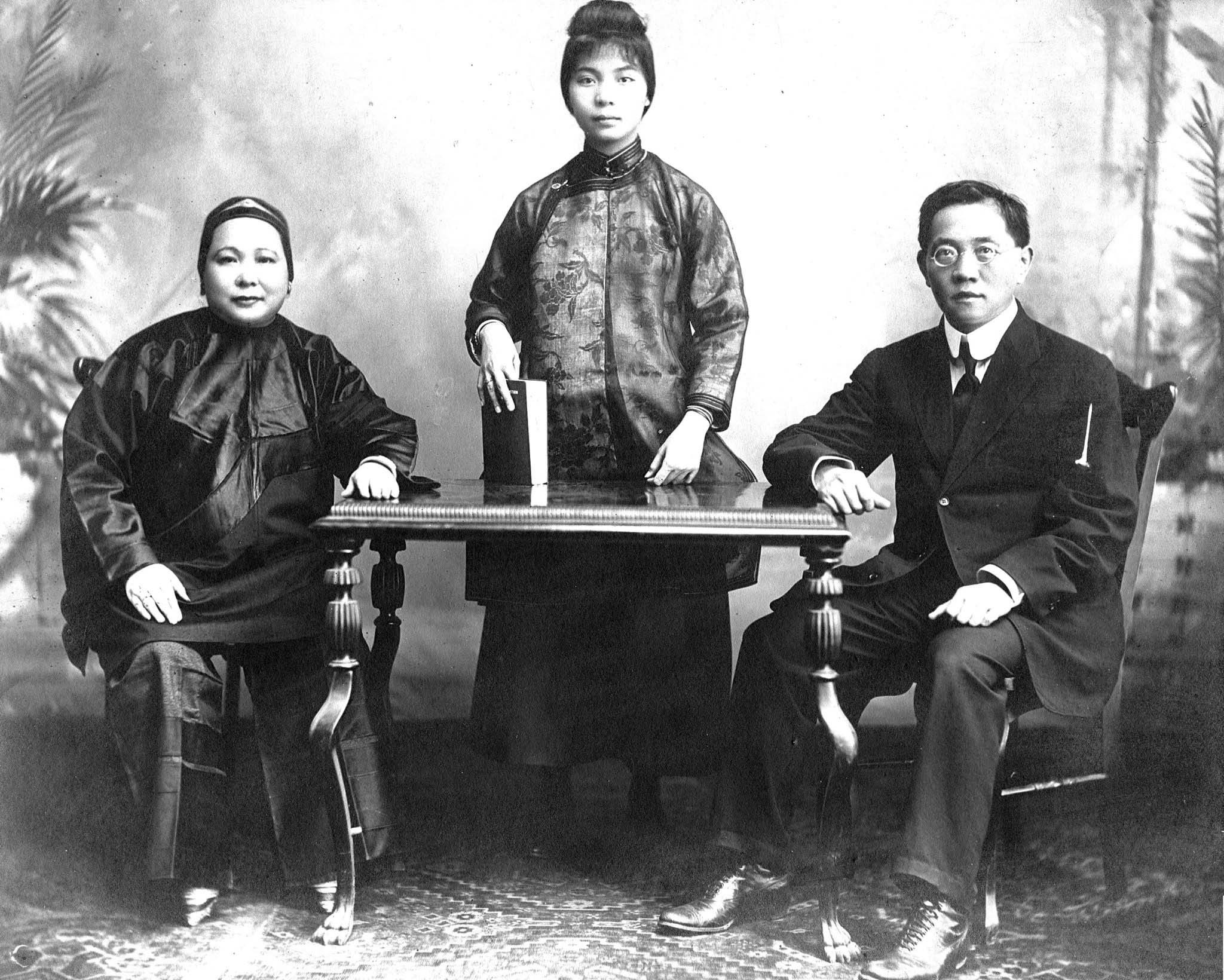
Portrait of Mabel Lee (center) with her mother and father. From “What You Should Know About Unsung Suffragist and TC Alum Mabel Ping-Hua Lee,” Teachers College, Columbia University, https://www.tc.columbia.edu.
Lee became active in the fight for women’s suffrage while studying at the famous Erasmus Hall Academy, where she was the only Chinese student in her class. In April 1912, the New York Tribune published an article about her intent to ride on horseback in the upcoming Suffrage Parade. With rumors circulating that Chinese women had obtained suffrage following the overthrow of the Qing Dynasty, American suffragists had Lee take center stage in the procession to bring these discussions to the forefront and underscore the urgency of America catching up with China. On May 4, 1912, Lee led the Suffrage Parade on horseback in front of thousands. After this historic moment, she continued with suffrage activism, which was intertwined with her hopes for China’s evolving political landscape. She advocated for women in both countries with her outstanding public speaking skills, giving speeches so captivating they received coverage from the press.
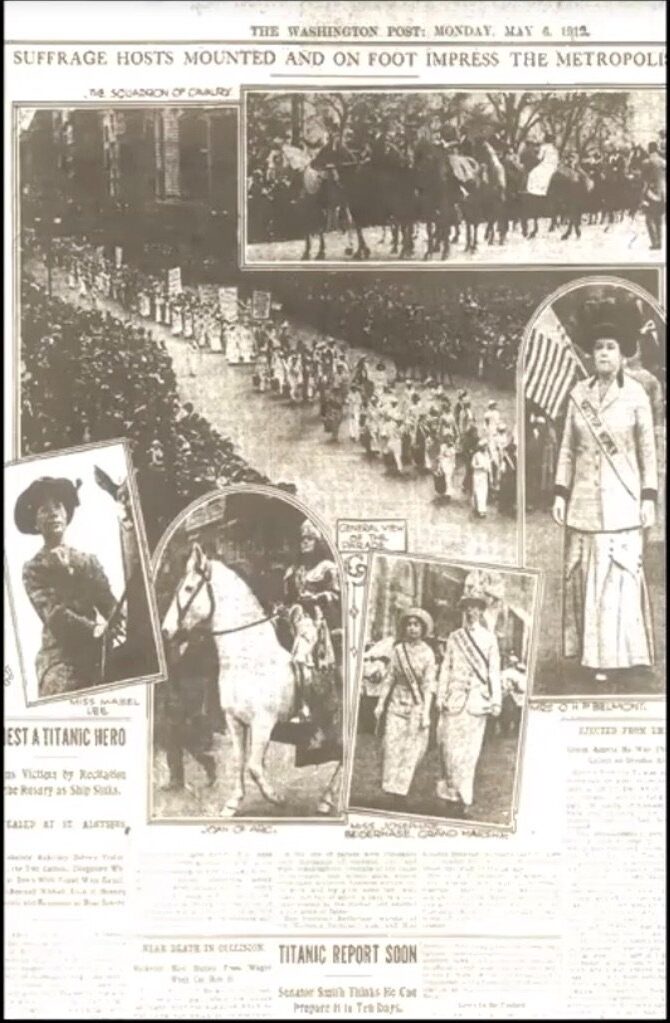
Mabel Lee on horseback, featured in the May 6th, 1912 issue of the Washington Post. From “Which Way to the Promised Land? Mabel Lee at the Intersection of Gender and Race,” The Gotham Center for New York City History, https://www.gothamcenter.org.
Lee enrolled at Barnard College around 1913, joining only three other Chinese women in attendance at the time. While studying philosophy and history there, she became increasingly involved with New York’s feminist groups and discussions about the future of China, creating points of intersection and mutual understanding between the two movements. She was involved in student organizations as a member of the Debate Club, president of the Philosophy Club and vice president of Columbia’s Chinese Students Club, part of the larger Chinese Students’ Alliance (CSA). There, she shared her perspective as a Chinese American suffragette, speaking with the CSA’s male members about feminism in China. This was her core interest, and these conversations were a way for her to influence the direction of her country; many members she spoke to would go on to become prominent leaders in China. Simultaneously, she conveyed her knowledge of Chinese politics and women’s rights to chief suffragettes, informing their understanding of the global movement and counteracting racist biases. Lee was a leader within the CSA, admired throughout both the national alliance and her university club. She continued giving lectures that enthralled crowds, publishing them along with her own political articles in The Chinese Students’ Monthly, of which she was an editor.
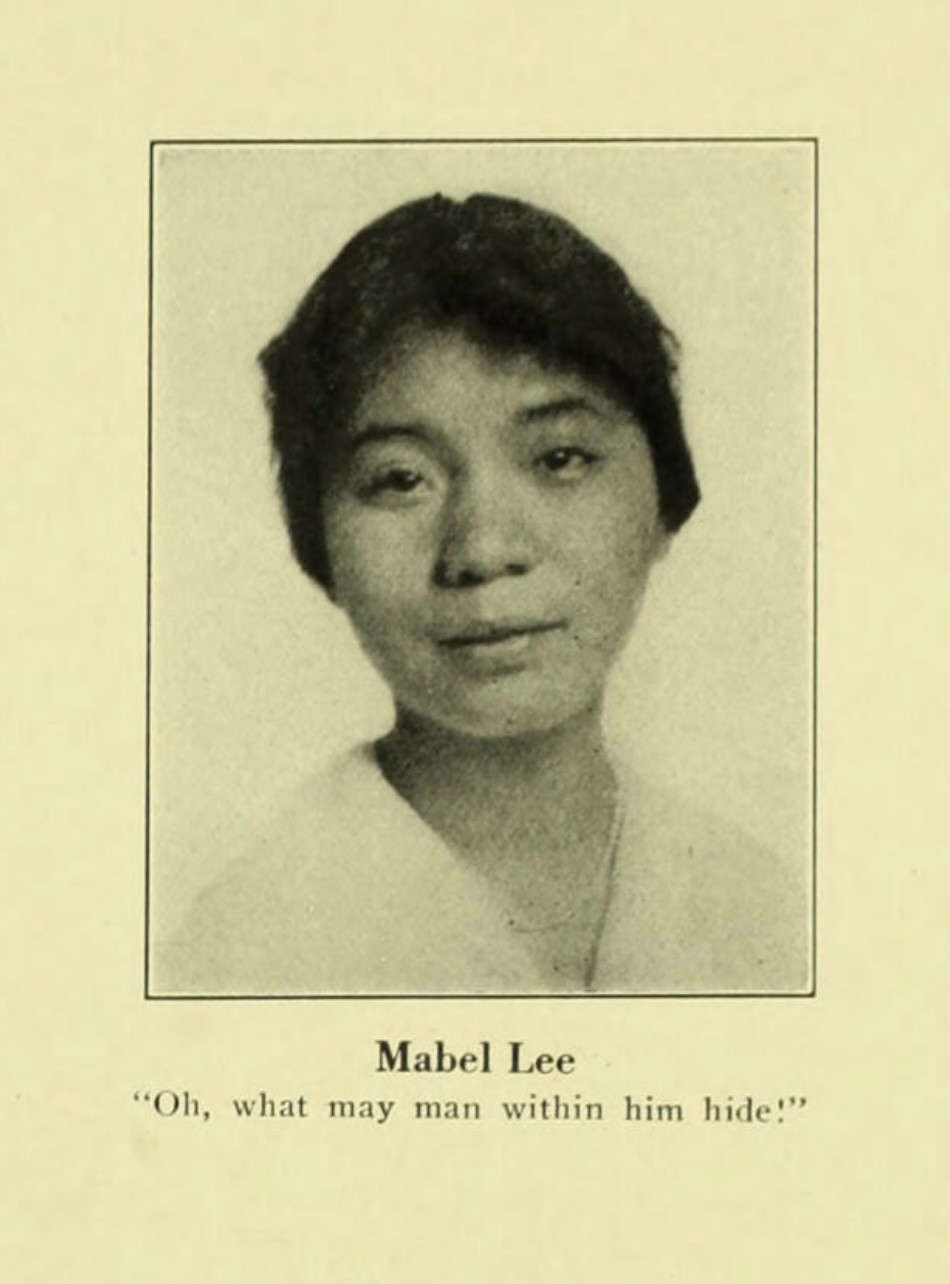
Mabel Lee’s Barnard College yearbook photograph. From “Mortarboard 1916,” Barnard Digital Collections, https://digitalcollections.barnard.edu.
After graduating from Barnard, Lee attended Columbia’s Teachers College to earn a master’s in educational administration. Around this time, Lee took to the streets once more, leading Chinese American women in another suffrage parade in 1917. This was the year women earned the right to vote in New York State, though the 19th Amendment did not pass until 1920. Despite this achievement, Lee herself could not vote since the Chinese Exclusion Act prevented her from becoming a naturalized citizen, which she knew would be the case from the start. Unable to exercise the rights she fought to secure for others, she nevertheless remained devoted to fighting for women’s rights.
Lee continued to break barriers as a Chinese American woman in academia. She earned a Ph.D. in economics from Columbia University in 1921, becoming the first Chinese woman to receive an economics Ph.D. in the country. At Columbia, closely mentored by economists such as Dr. Vladimir Simkhovitch and Edwin R. A. Seligman, she produced a massive dissertation titled The Economic History of China: With Special Reference to Agriculture. This was a remarkably comprehensive thesis on a topic largely neglected by modern scholars, and is a resource still referenced today. She included her own transcriptions of key documents that had yet to be translated from Chinese to English, paving the way for future scholarship. Her research was a way for her to contribute to China’s advancement at a time when many wholly rejected the past, believing that to be the way towards change. Lee, on the other hand, believed that studying the past was imperative for a better future.
After graduation, Dr. Lee was set on returning to China with her knowledge of economics and a desire to play an active role in shaping her country’s future. In 1923, she went to study economics in Europe, where she witnessed the vestiges of WWI and Germany’s historic hyperinflation. She then returned to China for the first time since she left as a child. Lee had many connections there, mostly fellow Columbia alumni who had become leaders within China’s political realm, so opportunities were plentiful. She was offered positions such as Dean of Women at what is now Xiamen University, but rather than accept, she began making plans to establish a business exporting Chinese goods from Hong Kong.
In 1924, however, tragedy struck in New York. Her father had suddenly died, presumably of a stroke or heart attack, while conversing with opposing tong leaders in an attempt to create peace between them. Dr. Lee was appointed to fill his shoes and lead the mission. While a devout Christian, involved with the YWCA and her father’s work from a young age, she had none of the normal training for the role and thus expected it to be temporary. However, she soon became a leader in Chinatown’s religious community and helped create a permanent home for the First Chinese Baptist Church at 21 Pell Street. Not fully abandoning her thoughts of resuming her endeavors in China, she took a trip back in 1937. On this trip, she saw the unfolding of the Second Sino-Japanese War, and shortly after she got back to America, Nanjing was taken over by Japanese forces. The Rape of Nanjing and WWII were core factors that kept her in the U.S. Unfortunately, this meant restricted career mobility; even with a Ph.D., few institutions would hire women, much less a Chinese woman. Her work in the church became her core priority.
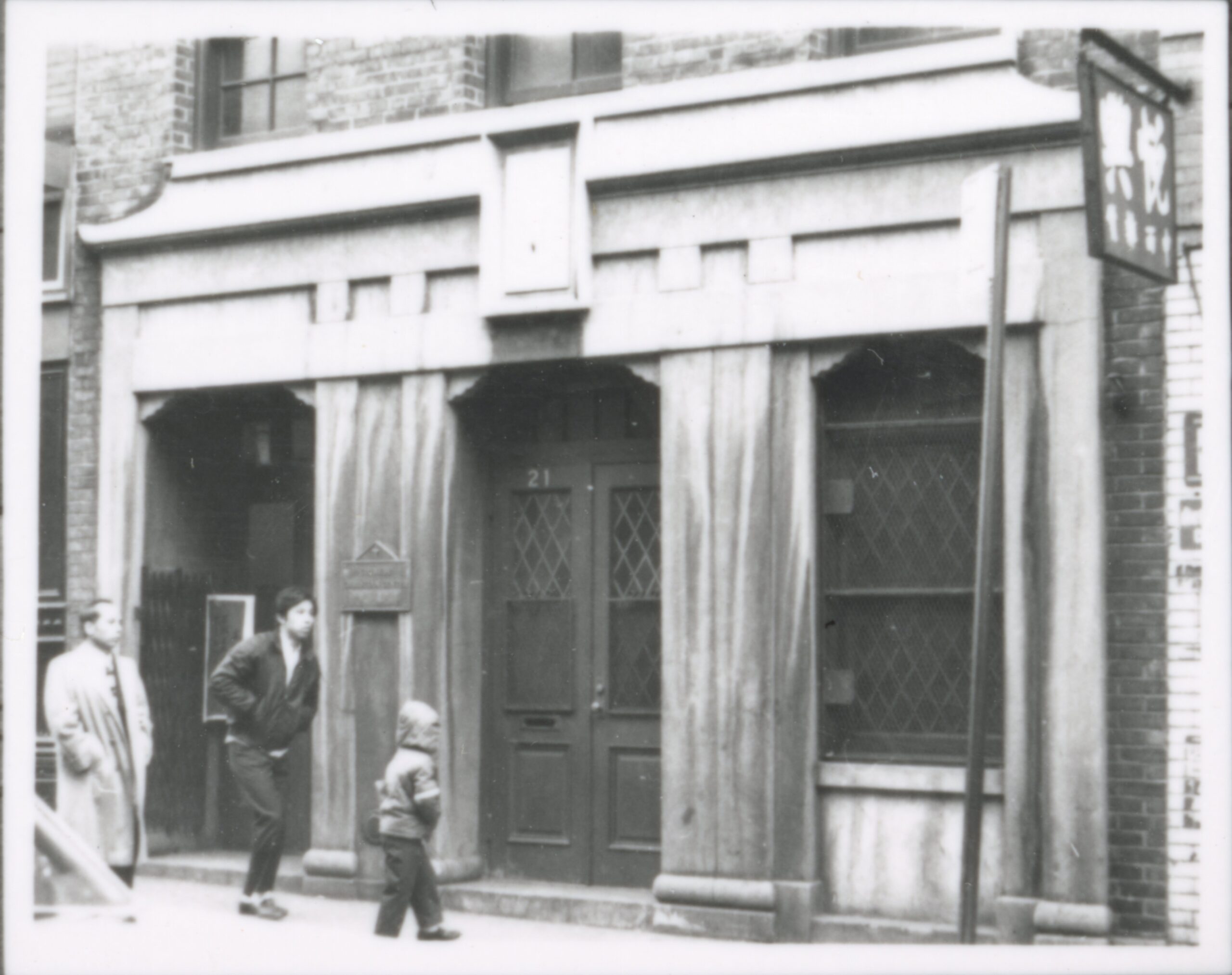
First Chinese Baptist Church at 21 Pell Street. Museum of Chinese in America (MOCA) Collection.
Leading the First Chinese Baptist Church was a labor of love for Dr. Lee. She entered a long battle over its property and ownership, wanting to dedicate its title to her father and put it in the hands of the community rather than the Baptist Missionary Society. Financial difficulties due to the Great Depression and the Missionary Society’s unwillingness to cooperate made this fight last until 1954, when the church finally became independent. In spite of these complications, Dr. Lee made the church a safe haven, serving immigrants in need of educational services and a gathering space. She mentored many students, encouraging them and pushing them towards academic achievement and success. Her public speaking skills made her an excellent preacher. Dr. Lee also founded and directed the Chinese Christian Center, teaching Chinese immigrants English and vocational skills and providing kindergarten services as well as a free medical clinic. Throughout the decades she spent leading the church, she remained steadfast in her commitment to her community and her faith.
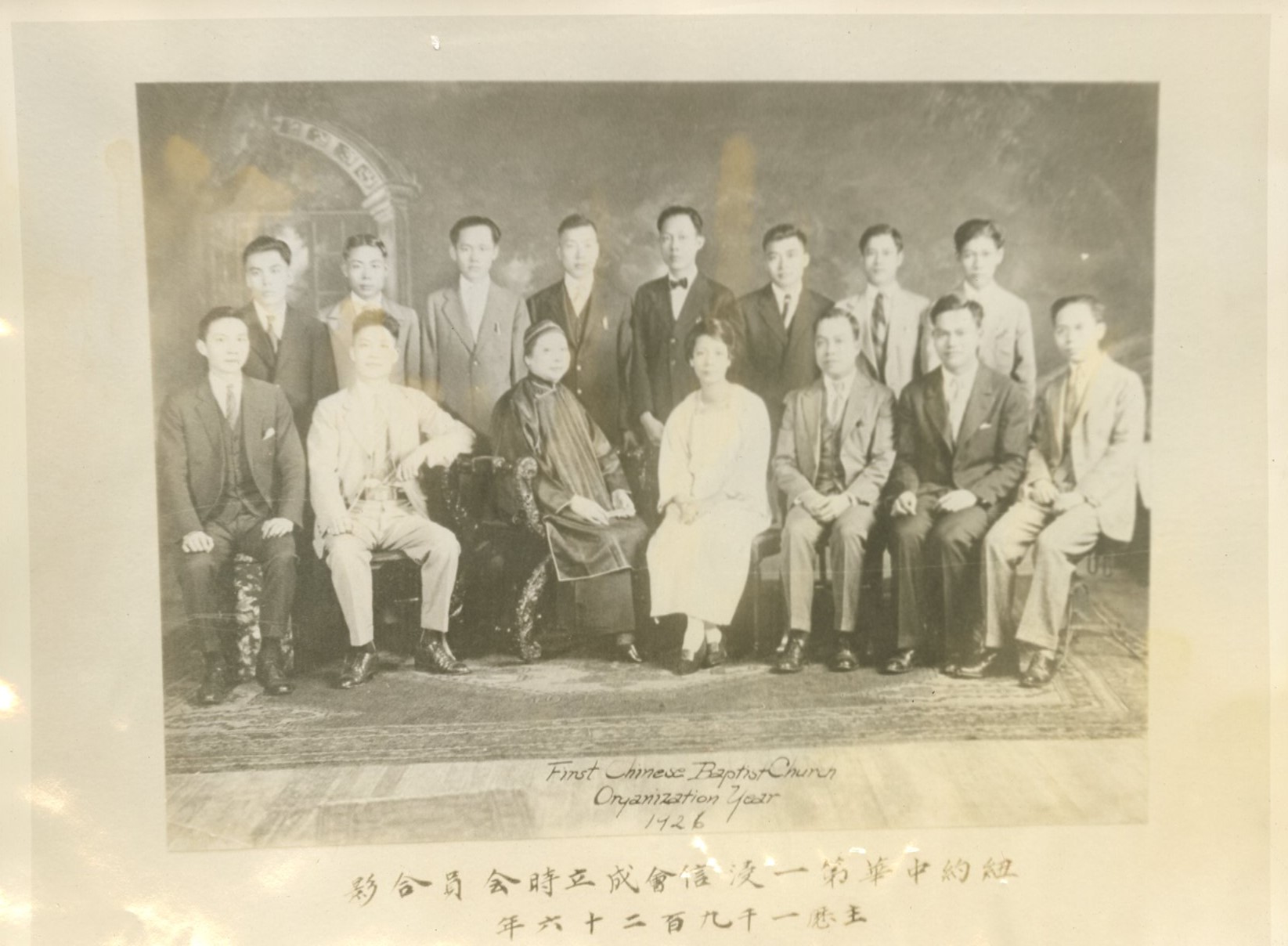
Mabel Lee (bottom center) with her mother (third from bottom left) and members of the First Chinese Baptist Church. Photographed to commemorate their organization in 1926. Museum of Chinese in America (MOCA) Collection.
In 1966, Dr. Lee passed away. She has only recently begun receiving recognition for her pivotal work in the women’s suffrage movement. She was honored in 2018 when the Chinatown Post Office on Doyers Street was named the “Mabel Lee Memorial Post Office.” In addition to her courage and unrelenting passion as a suffragist, her legacy lives on in the First Chinese Baptist Church and its community, where she invested so much time and care into the lives of her fellow Chinese Americans. In her fight for women’s suffrage, her exemplary scholarship, and her religious leadership and community work, Dr. Lee’s impact is still felt today.
By Nikolai Gottesdiener, Bloomberg Arts Intern at MOCA