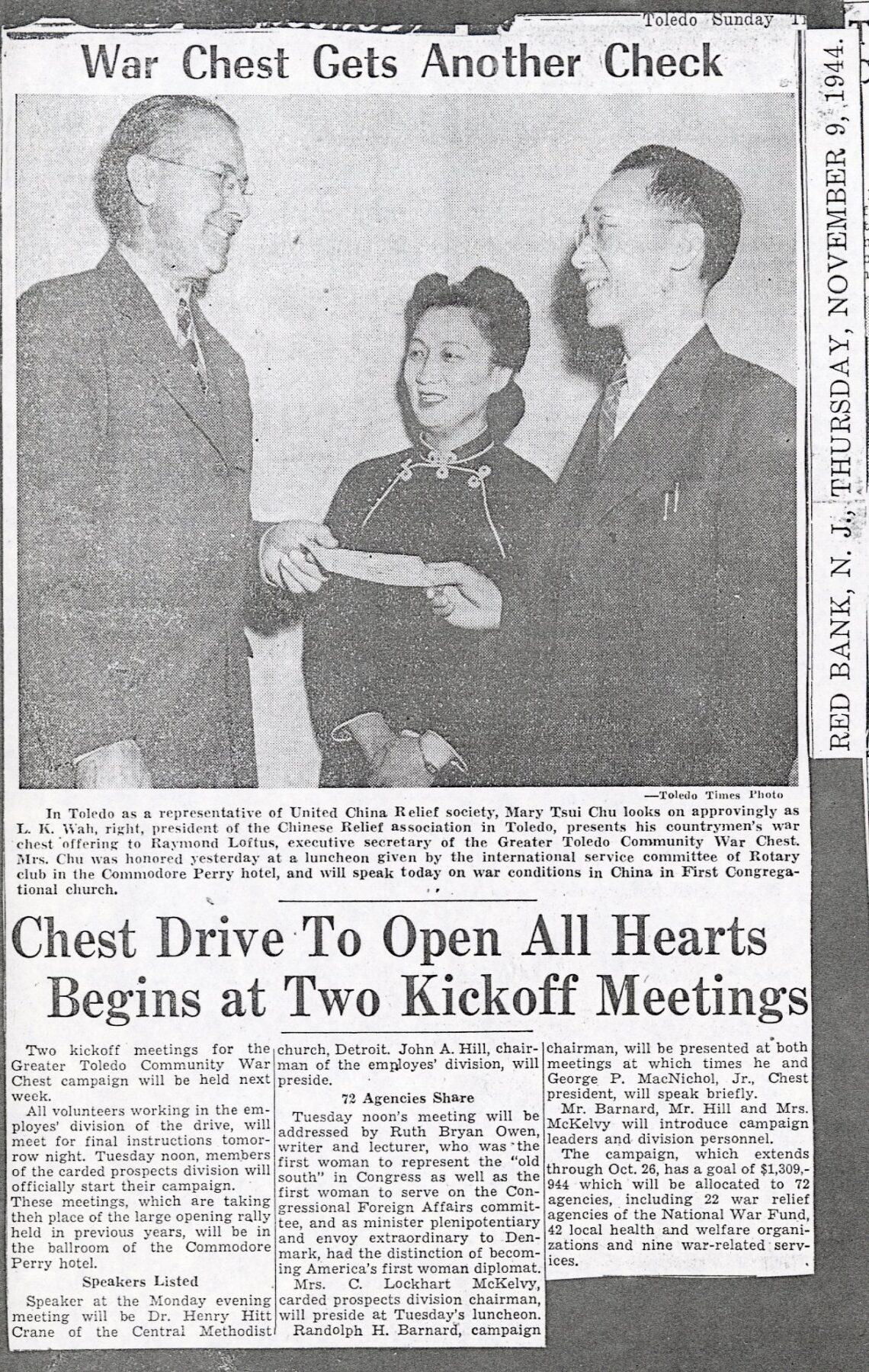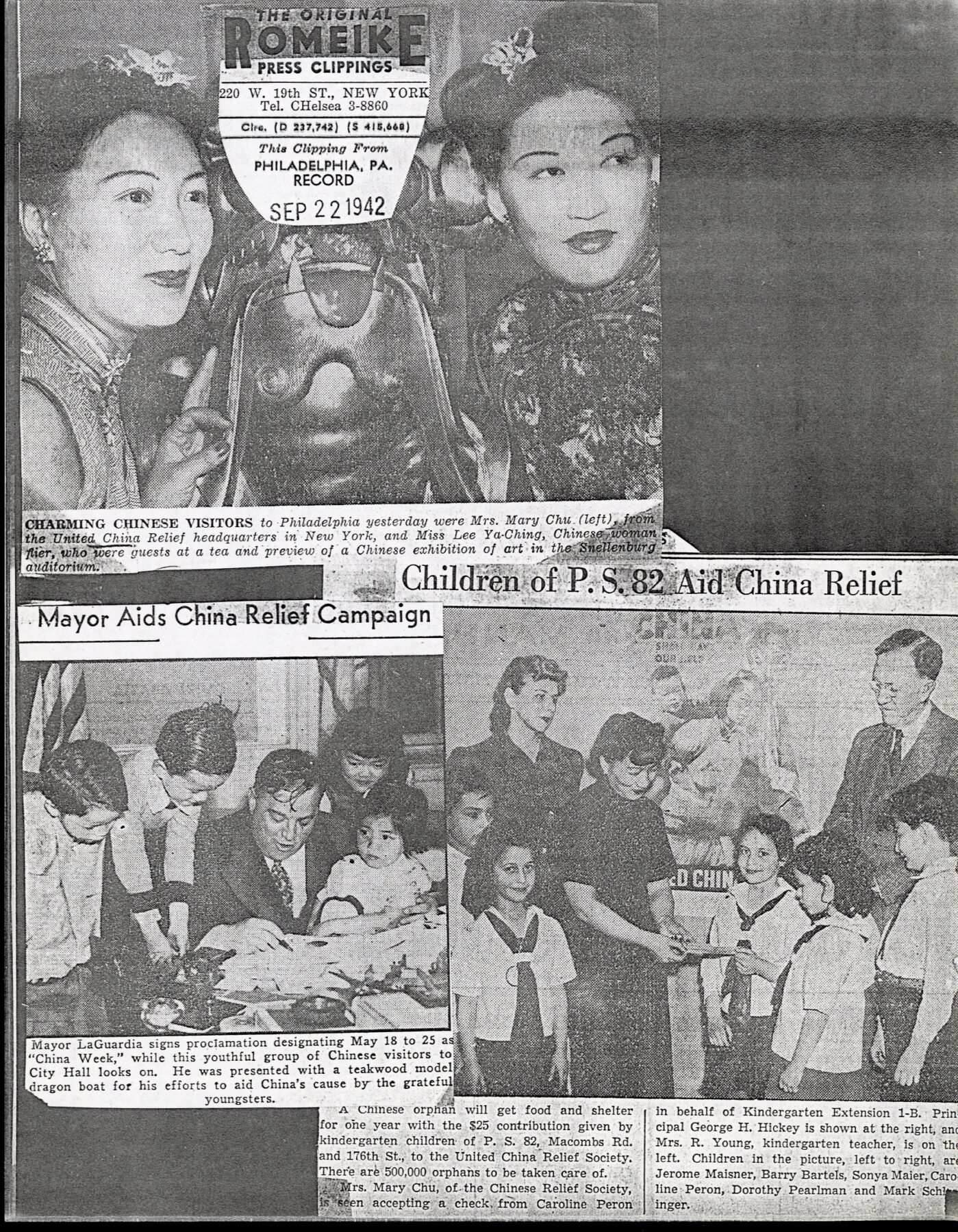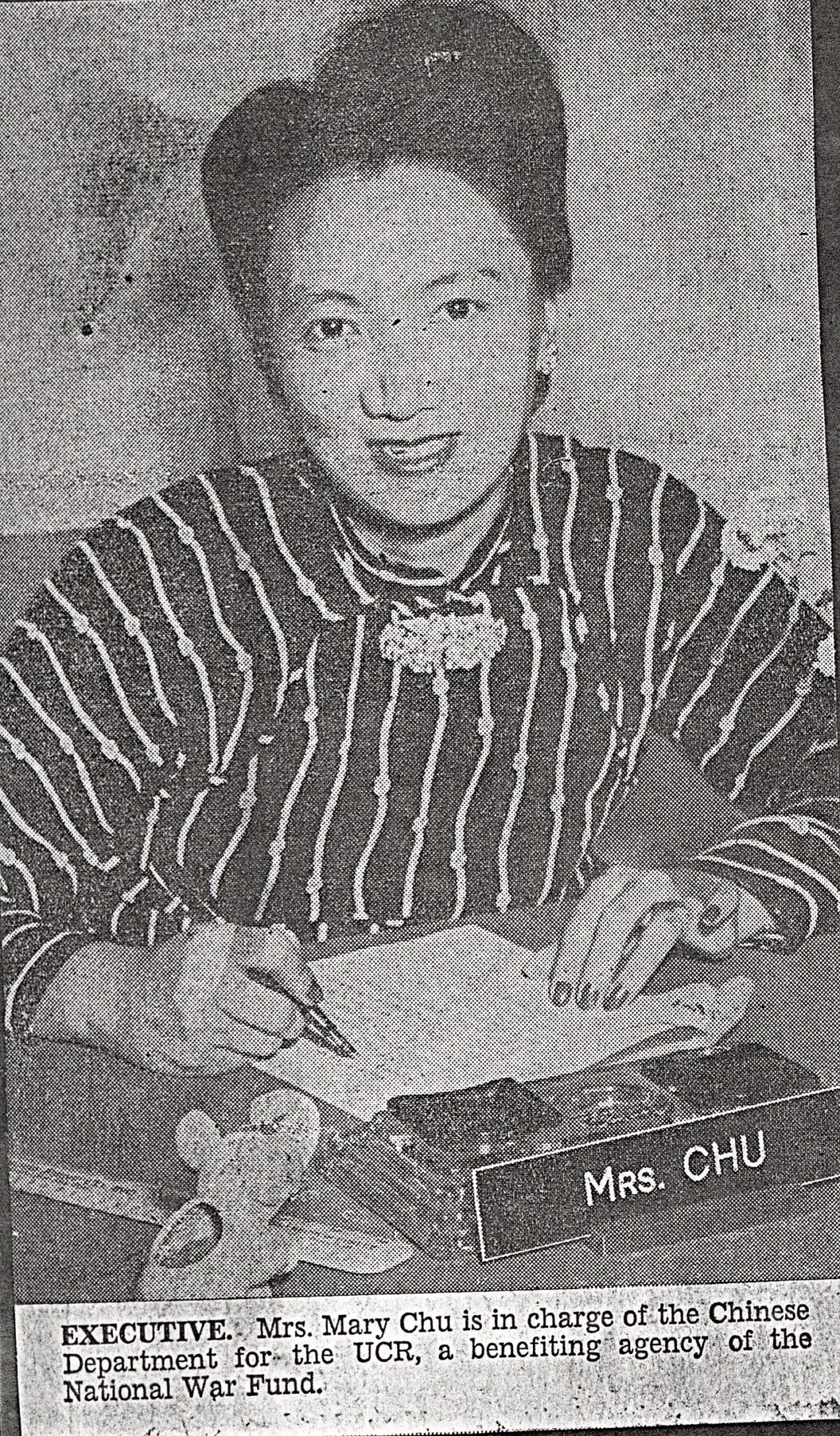
This photograph of Mary Foo (then known as Mary Chu) was taken at her desk in the United China Relief office, where she worked as a liaison officer and interpreter in the publicity department during World War II. One of the few educated women in New York’s Chinatown fluent in Mandarin, Cantonese, and English, she became a key figure in winning American support for China’s cause. Through fundraisers that promoted American understanding of China and Chinese culture, she helped secure vital medical supplies and humanitarian aid for displaced families and war orphans.Log Out
Born in Japan in 1905, Foo first came to the United States with her parents as a young child in the 1910s. Her father, a supporter of Sun Yat-Sen and the revolutionary movement while a student in Japan, had moved the family first to Vancouver then to San Francisco, where he served as a lay minister and editor of the Chinese-language newspaper, Chung Sai Yat Po. A proponent of democracy and baihuawen (白话文, ”plain speech” or vernacular), he also established a Chinese school in the community to increase literacy among youth. During the First World War, the family returned to Canada then China due to financial difficulties. In Shanghai, Foo attended Eliza Yates, a Baptist missionary school, and after graduating in 1922, taught in Nanking and Guangzhou for a time. In 1925, she immigrated to the U.S. after Farn B. Chu, with whom she had been corresponding, offered her passage to New York on the agreement that she would marry him if she found him companionable. She briefly attended Barnard College before pausing her education to raise her three young daughters—Cora May, Dawn, and Marilyn—while her husband established himself as a Yale-trained physician.
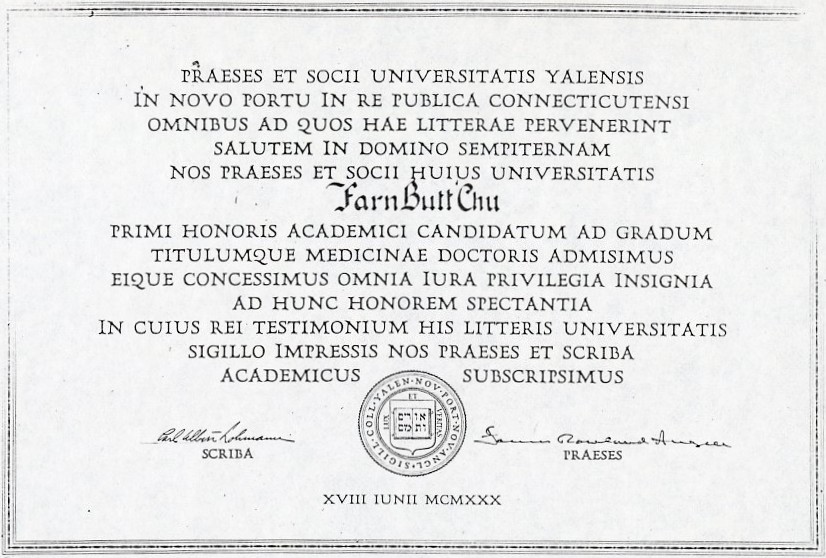
Dr. Farn B. Chu’s MD diploma from the Yale School of Medicine, 1930. Courtesy of Mary Foo, Museum of Chinese in America (MOCA) Collection.
Her routine life as a housewife was disrupted by the outbreak of war between Japan and China in 1937. As the Chinatown community mobilized to do its part and the war created new opportunities for women, Foo assumed an active role in fundraising for the American Bureau for Medical Aid to China, an organization her husband co-founded out of concern for China’s medical unpreparedness in the face of war. The Bureau sent vital medicines and surgical equipment to China. The news article below advertised one of Foo’s earliest fundraising efforts: monthly, ten-course banquet-style benefit dinners that encouraged Americans to branch out from the usual chop suey to Peking duck, bird’s nest soup, and other more authentic Chinese dishes.
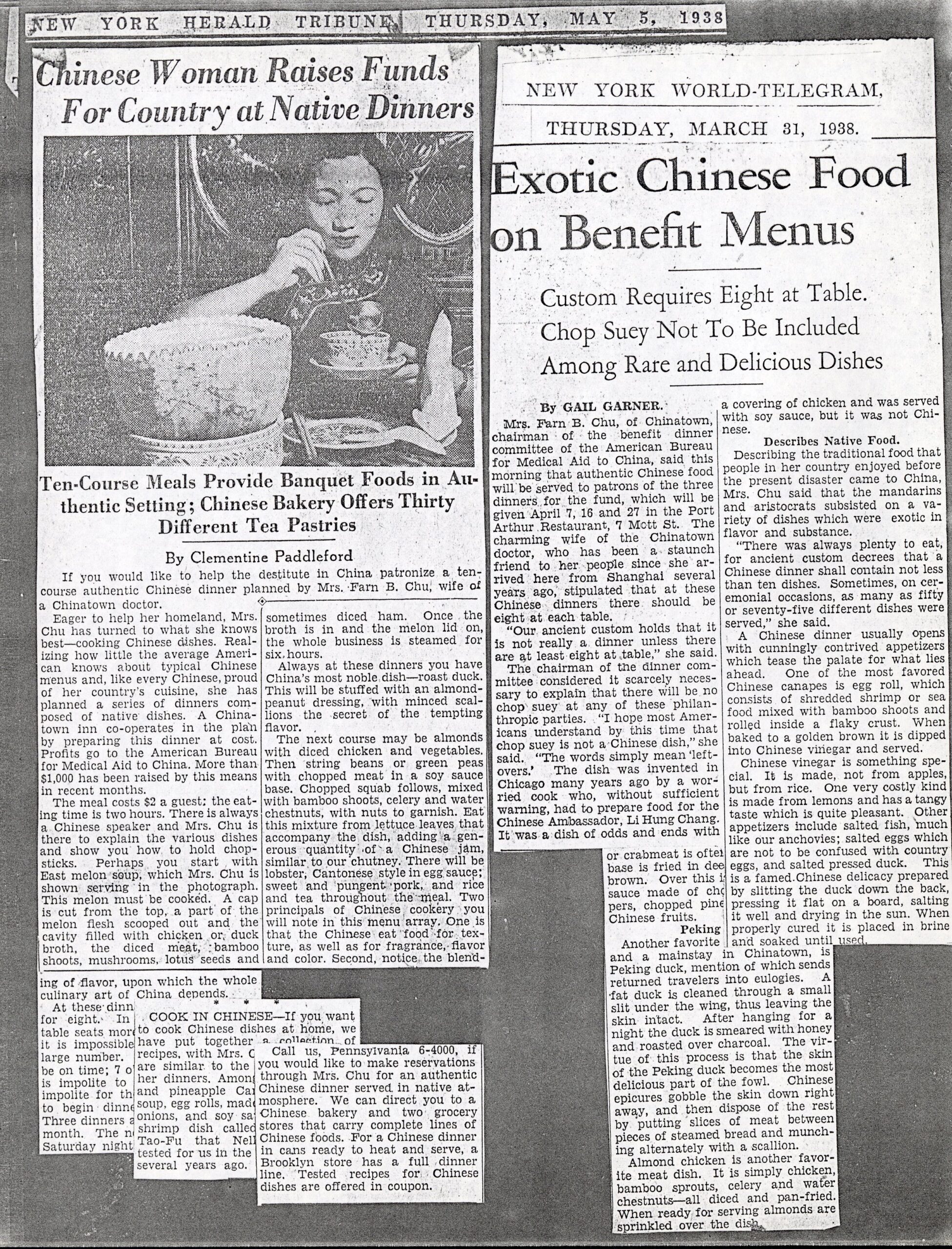
Local press coverage of Mary Foo’s banquet-style dinners to benefit the American Bureau for Medical Aid to China. Courtesy of Mary Foo, Museum of Chinese in America (MOCA) Collection.
To support the Bureau’s campaign to purchase eight million quinine tablets to stave off a malaria epidemic among children in China, Foo devised the idea of hosting similar lunches for schoolchildren, which gave many their first taste of Chinese food in Chinatown. For seventy-five cents—twenty-five cents of which went toward the purchase of quinine—children could enjoy a meal alongside Chinese children, who taught them how to use chopsticks. Foo’s daughters, along with the children of famed author Lin Yutang and former Chinese ambassador C. H. Wang, were among the young hosts.
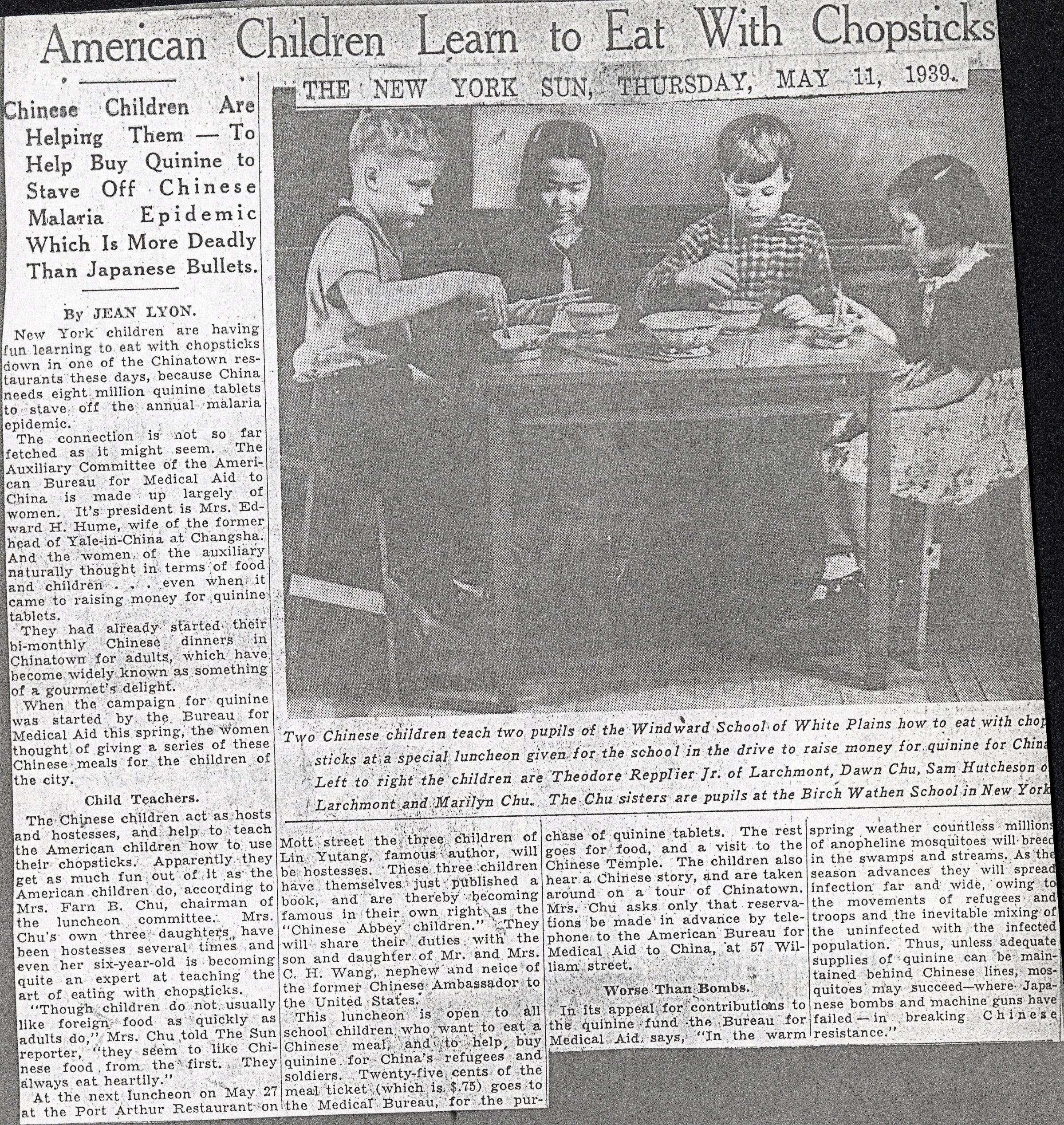
Newspaper article reporting on Chinatown restaurant lunches Mary Foo organized for American schoolchildren to help the American Bureau for Medical Aid to China raise funds for its quinine campaign, in The New York Sun, May 11, 1939. Courtesy of Mary Foo, Museum of Chinese in America (MOCA) Collection.
Together with her family, Foo also regularly supported “Bowl of Rice” parties—major community-based fundraising campaigns organized in localities across the country that raised millions to meet China’s medical needs. These “Bowl of Rice” parties often took the form of street festivals in San Francisco and New York Chinatowns, such as the one captured below, in which parade participants carried a giant flag to collect monetary contributions. In smaller localities, churches, clubs, and individuals raised funds by hosting dinner parties, which Foo and her family modeled through a home-cooked meal with reporter Grace Turner at their 47 Mott Street home.
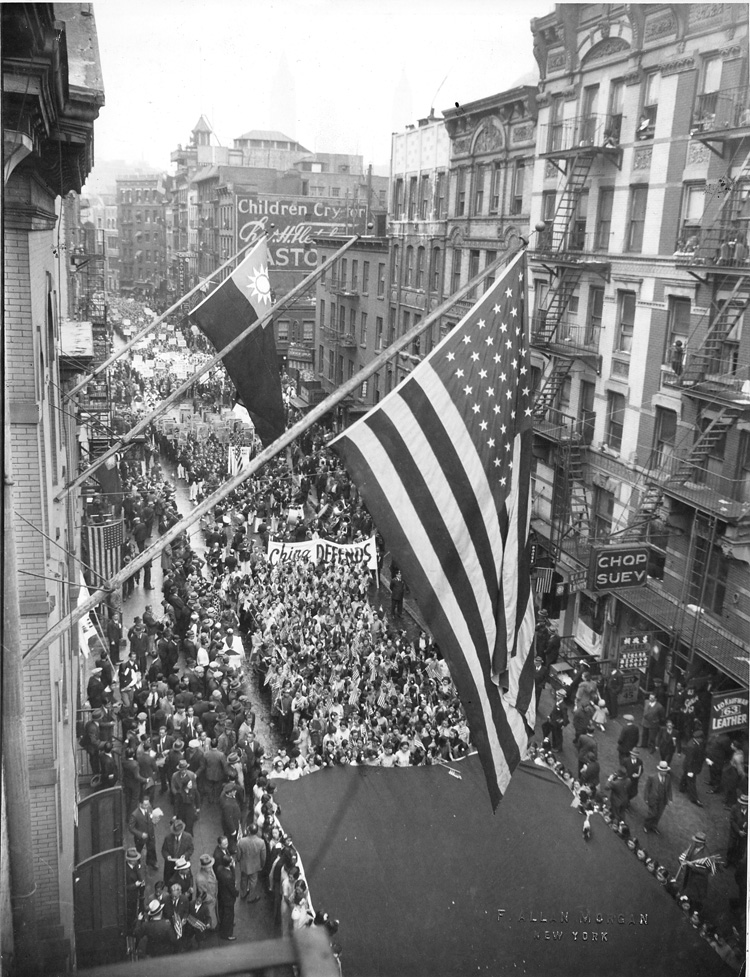
2009.024.004 “Bowl of Rice” parade going down Mott Street in New York Chinatown during World War II. Photograph taken by Allan F. Morgan. Courtesy of Marilyn Chou, Museum of Chinese in America (MOCA) Collection.
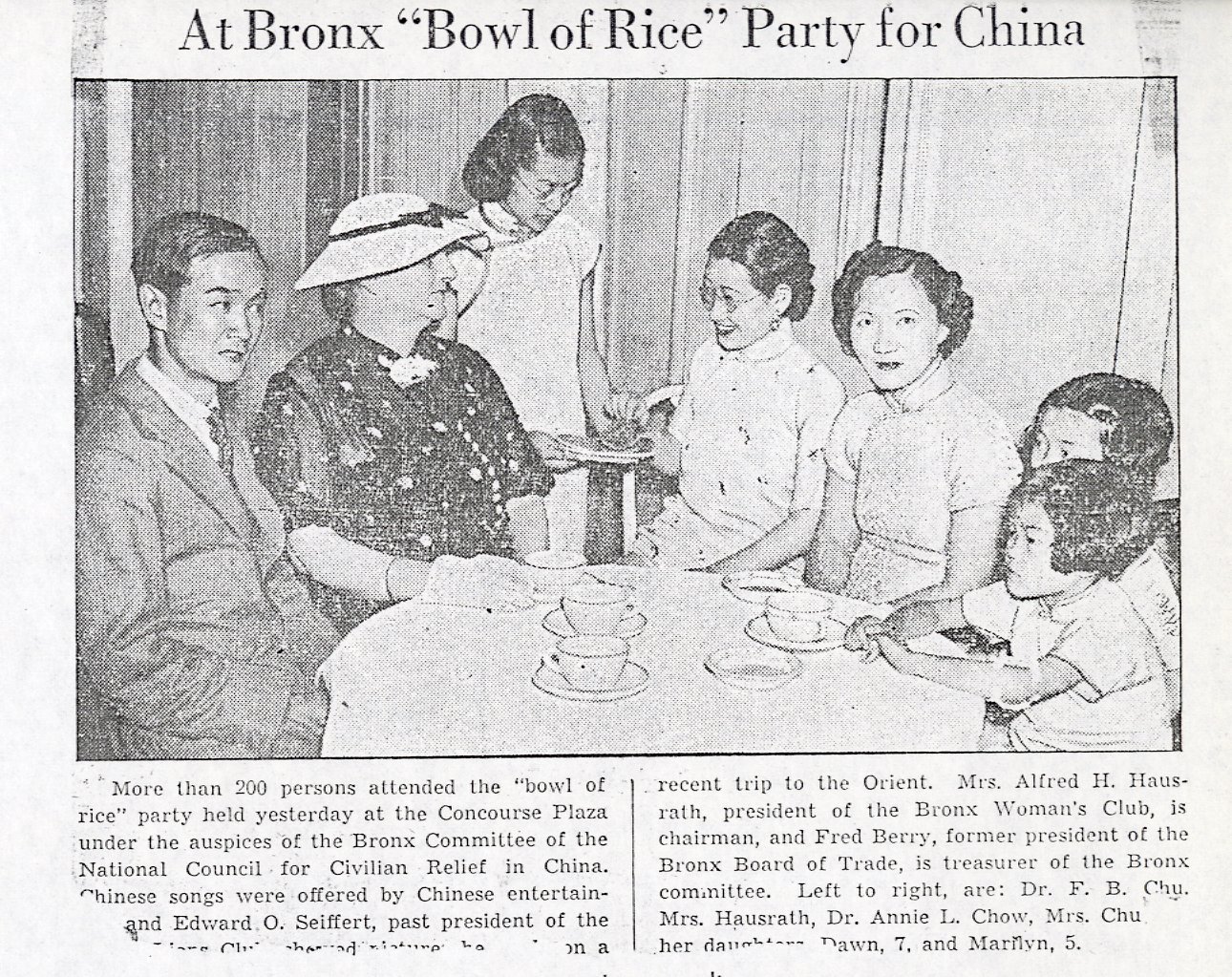
The Chu Family at a Bronx “Bowl of Rice” Party. Courtesy of Mary Foo, Museum of Chinese in America (MOCA) Collection.
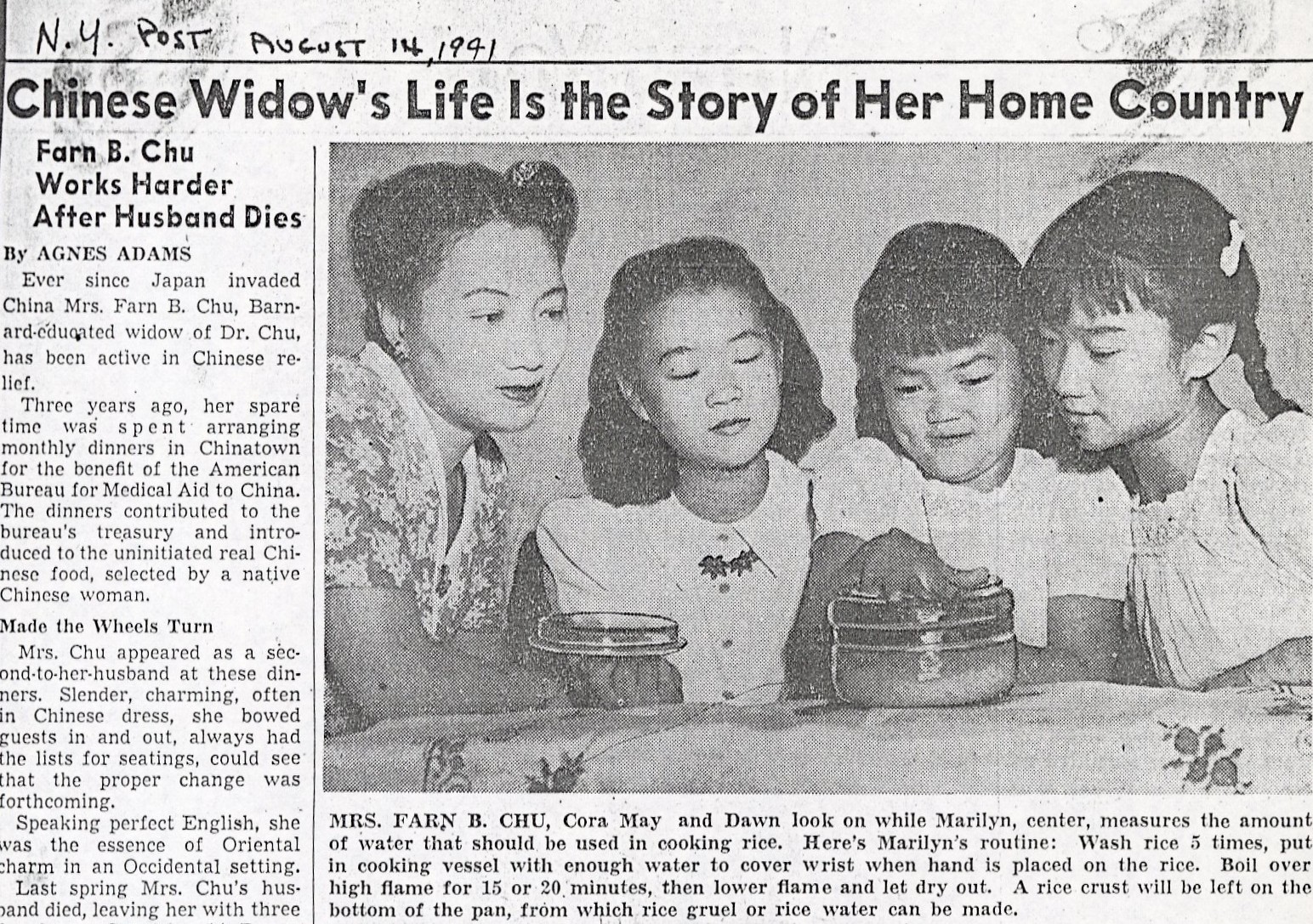
Mary Foo photographed with her three daughters Cora May, Marilyn and Dawn, in “Chinese Widow’s Life Is The Story of Her Home Country,” The New York Post, August 14, 1941. Courtesy of Mary Foo, Museum of Chinese in America (MOCA) Collection.
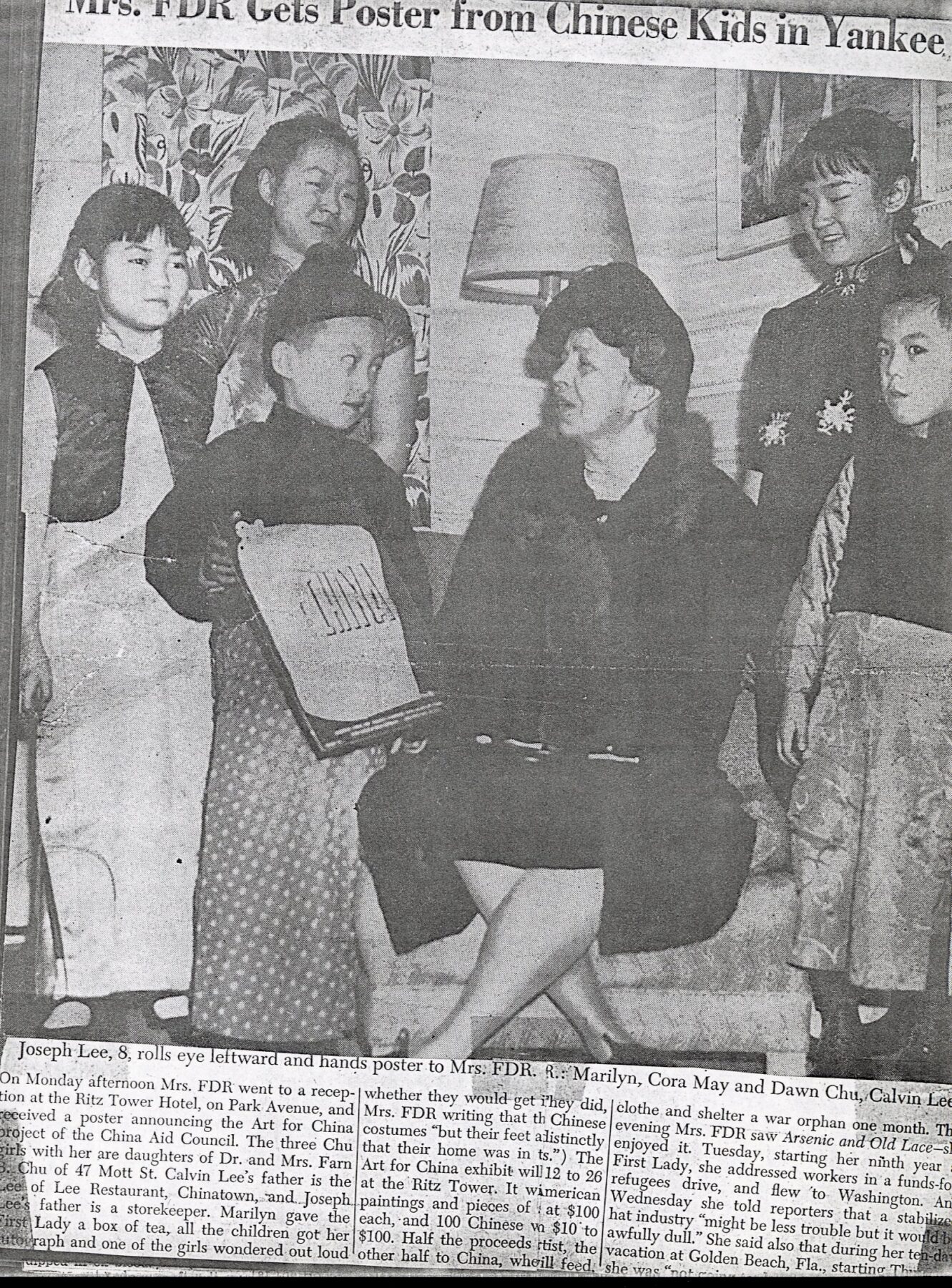
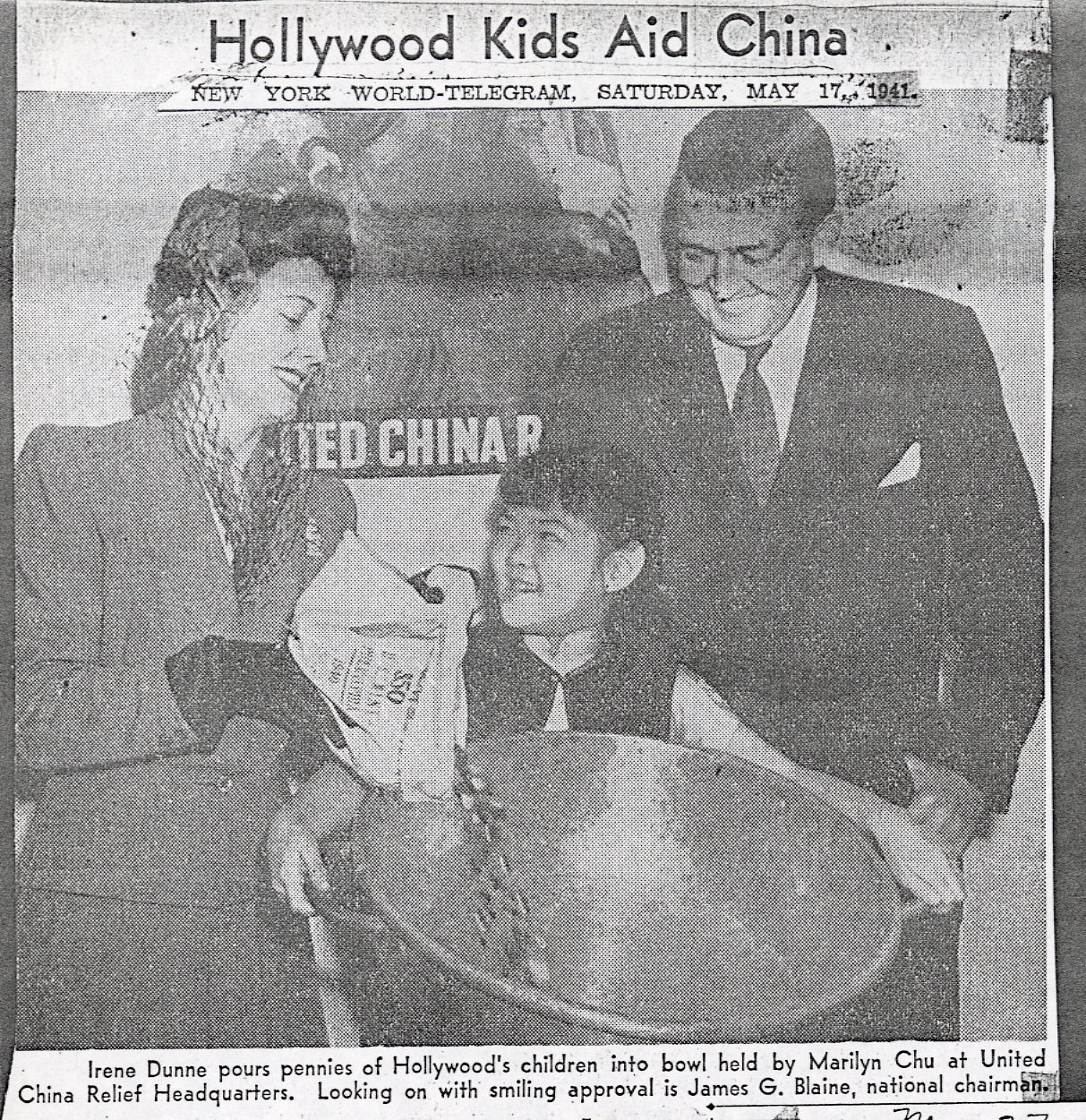
After her husband’s untimely death in 1940 left Foo as her family’s primary source of support, his fraternity brothers recommended her for the liaison position at United China Relief (UCR). As a representative of UCR, Foo traveled across the country to speak on conditions in China before women’s groups and actively supported the organization’s fundraising and publicity efforts. Her daughters helped their working mom at home with the housework, while her youngest, Marilyn, helped her at work as UCR’s youngest volunteer. Featured in multiple UCR publicity photos, the endearingly dimpled Marilyn charmed First Lady Eleanor Roosevelt, Mayor Fiorello LaGuardia, Hollywood actress Irene Dunne, and countless potential UCR supporters.